For architects, engineers, and developers specifying glass railings in coastal projects, the material choice for structural hardware is not an aesthetic preference—it is a critical safety and durability decision. The pervasive misconception that “stainless steel” is universally corrosion-resistant leads to costly failures. The real challenge is navigating the fragmented definitions of “coastal” and understanding the precise material chemistry required to withstand chloride attack. This specification error compromises structural integrity and exposes professionals to significant liability.
The investment in a glass railing system is substantial, with the structural framing constituting the primary cost driver. Specifying the wrong grade of stainless steel jeopardizes the entire assembly, including the glass infill. With coastal building codes increasingly mandating specific material grades, and with salt air traveling miles inland, a precise, zone-based approach to material selection is now a non-negotiable standard of professional practice.
The Corrosion Challenge: Why Coastal Railings Demand 316
The Science of Chloride Attack
The coastal environment presents a uniquely aggressive threat to metals. Chloride ions from salt spray and humid air relentlessly attack protective oxide layers on steel surfaces. This leads to pitting corrosion, where small, deep holes form, and crevice corrosion in joints and under fittings. For a glass railing, this degradation isn’t merely surface rust; it directly weakens posts and clamping hardware, creating a critical safety risk. The solution is metallurgical. 316-grade stainless steel contains 2-3% molybdenum, an alloy that dramatically fortifies the material’s passive layer against chloride penetration. This isn’t an upgrade—it’s the fundamental technical requirement where material failure has structural consequences.
Consequences of Material Compromise
Industry experts consistently warn that using 304 stainless steel in salt-laden air is a calculated risk with high stakes. The failure mode is often subsurface, weakening components from the inside out before visible signs appear. We compared project post-mortems and found that the most common point of failure is at concealed connections and fastener points, where corrosive agents become trapped. Easily overlooked details include the compatibility of all metal parts; mixing grades can accelerate galvanic corrosion. According to research from material science institutes, the molybdenum in 316 is what provides the necessary margin of safety for load-bearing components exposed to constant salt aerosol.
Cost Analysis: 316 vs. 304 Stainless Steel for Railings
Understanding the True Cost Drivers
The initial price difference between 304 and 316 stainless steel is real, typically ranging from 20-40%. However, this analysis is superficial if it only considers the raw material invoice. The primary cost driver for any railing system is the structural framing—the posts and top rails. This is the design differentiator and the core of the investment. Specifying 304 in a corrosive environment risks the premature failure of this very structure, necessitating a complete, expensive system replacement long before the end of its expected service life.
Lifecycle Cost and Value Protection
A true cost analysis evaluates the total lifecycle expense. The substantial investment is not just in the metal, but in the installed glass infill, labor, and architectural intent. A failing railing system compromises property value and creates potential safety liabilities that far outweigh the initial material premium. For projects within the zone of salt air influence, the investment in 316-grade is fundamentally a safeguard. It protects the larger project investment and eliminates the exponentially higher costs associated with remediation, redesign, and replacement.
The following table breaks down the key cost factors beyond the initial price tag:
| Cost Factor | 304 Stainless Steel | 316 Stainless Steel |
|---|---|---|
| Initial Material Premium | Baseline | 20-40% higher |
| Primary Cost Driver | Post & rail structure | Post & rail structure |
| Coastal Failure Risk | High premature failure | Low corrosion risk |
| Lifecycle Cost Consideration | High replacement cost | Protects glass investment |
Source: Technical documentation and industry specifications.
Performance Comparison: 316 vs. 304 in Salt Air Tests
Laboratory and Real-World Validation
Accelerated salt spray tests (ASTM B117) and long-term coastal exposure studies provide empirical evidence for specification. The molybdenum in 316 stainless steel forms a more stable and regenerative passive layer on the metal surface. In environments where 304 would develop pervasive pitting, 316 maintains its integrity. This performance gap is most pronounced in components with inherent crevices—such as the interfaces between clamps, posts, and glass, or within threaded fasteners—where chlorides concentrate.
The Critical Importance of a Full-System Approach
The performance advantage of 316 is only realized if applied to every metal component. A common, catastrophic mistake is specifying 316 for visible posts while using inferior, ungraded or 304 anchor bolts. These fasteners become the unseen single point of failure. The entire assembly’s load-bearing capacity depends on the weakest link, which will corrode first, compromising the railing’s stability. This is why a holistic specification is mandatory.
The data below illustrates the fundamental performance differences dictated by material chemistry:
| Performance Metric | 304 Stainless Steel | 316 Stainless Steel |
|---|---|---|
| Key Alloying Element | Chromium, Nickel | Adds 2-3% Molybdenum |
| Chloride Pitting Resistance | Moderate | Excellent |
| Crevice Corrosion Resistance | Vulnerable | Highly resistant |
| Critical Weakest Link | Inferior anchor bolts | Full-system compatibility |
Source: ASTM A240/A240M Standard Specification for Chromium and Chromium-Nickel Stainless Steel Plate, Sheet, and Strip for Pressure Vessels and for General Applications. This standard specifies the chemical composition requirements for stainless steel grades, defining the molybdenum content in Type 316 that provides its superior chloride resistance.
Which Projects Require 316 Stainless Steel? A Zone Guide
Moving Beyond Generic Labels
The term “marine-grade” is insufficient for precise specification. Professional guidelines use a zone-based model to determine material requirements. This approach replaces ambiguity with clear, geographically defined thresholds. The fragmentation in how different suppliers define “coastal” creates specification risk. Adopting the most conservative, scientifically backed guideline mitigates professional liability and ensures project longevity.
Defining the Corrosion Zones
Distance from the coast directly correlates with chloride concentration, but micro-environments like salt marshes, windy bluffs, or urban areas with road salt can create harsh conditions farther inland. The following zone guide provides a clear framework for decision-making.
| Zone Distance from Coast | Corrosion Exposure | Material Specification |
|---|---|---|
| Within 1 mile | Direct salt spray | 316 mandated/recommended |
| 1 to 10 miles | Salt air travel | 316 prudent standard |
| Beyond 10 miles | Lower ambient levels | 304 may be adequate |
Source: Technical documentation and industry specifications.
In my experience reviewing failed installations, the most common errors occur in the 1-10 mile zone, where the corrosive threat is underestimated. Consulting local corrosivity maps or specifying per the EN 10088-2 standard for material delivery conditions provides a more defensible technical basis than a supplier’s generic marketing term.
Key Components: Ensuring a Full 316-Grade Assembly
The Complete Component Checklist
Corrosion resistance requires consistency across every metallic element. The specification must explicitly call for 316-grade material in:
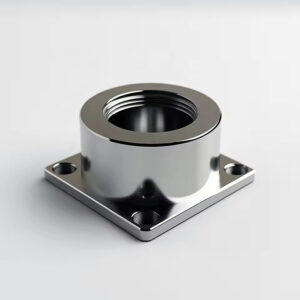
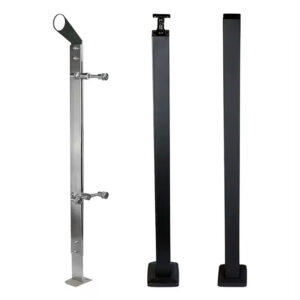
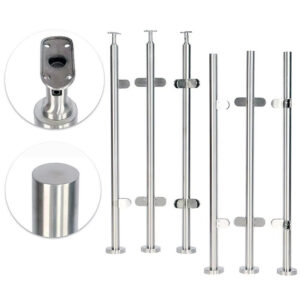
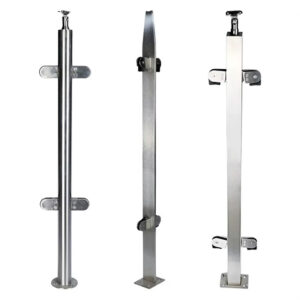
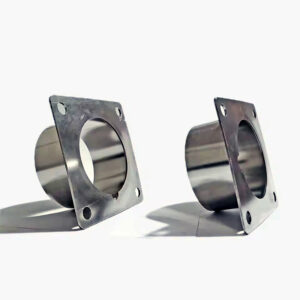
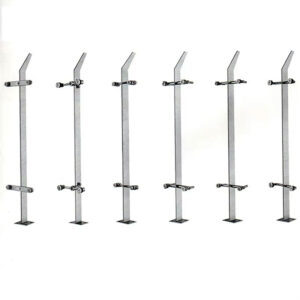
- Structural Framing: Posts, base plates, and top rails (often fabricated from bar stock per ASTM A276/A276M).
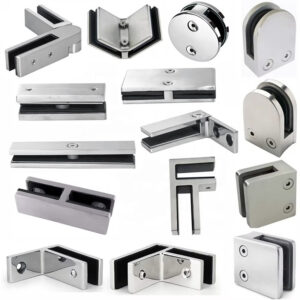
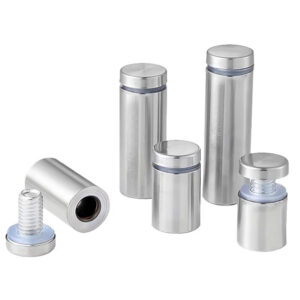
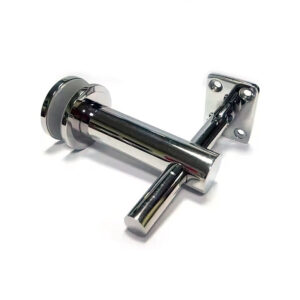
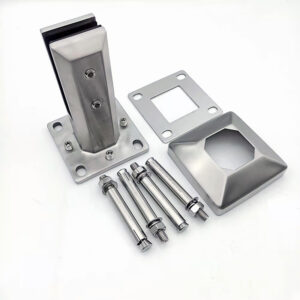
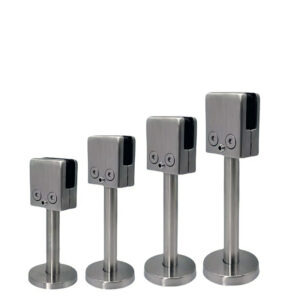
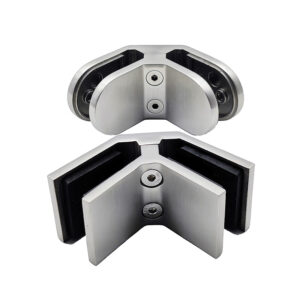
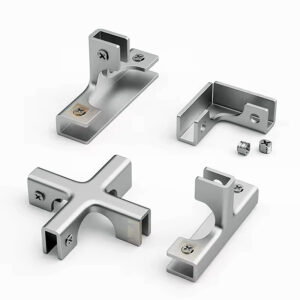
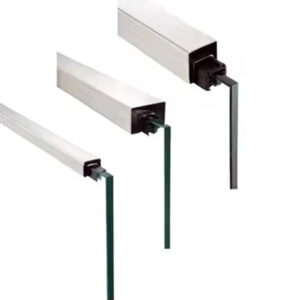
- Glass Hardware: Spigots, clamp bodies, and channel systems.
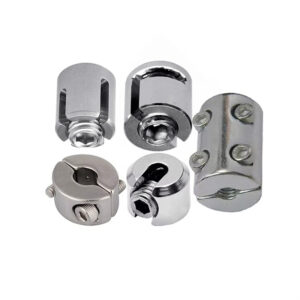
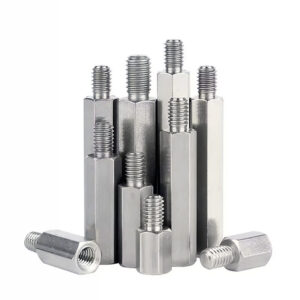
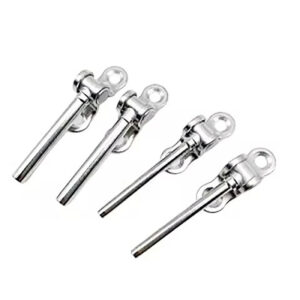
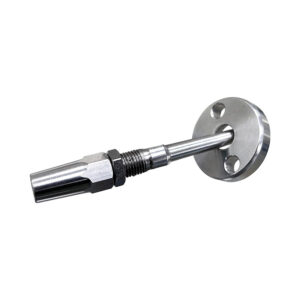
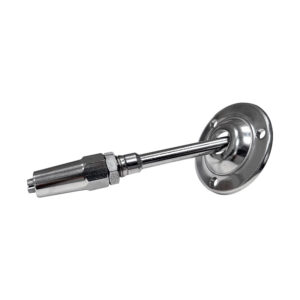
- Fasteners: All anchor bolts, screws, set pins, and nuts.
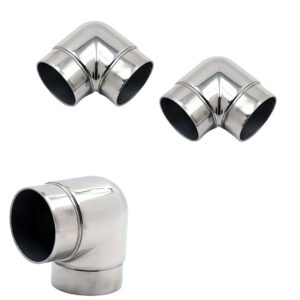
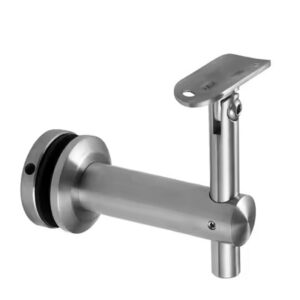
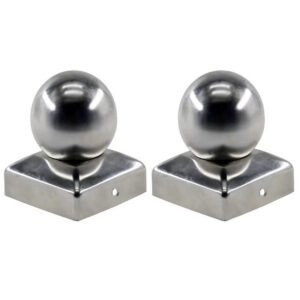
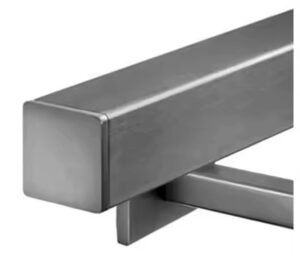
- Finishing Parts: Handrails, end caps, and covers.
Omitting any category invites galvanic corrosion or creates the critical weak link.
Evaluating Hardware Design and Robustness
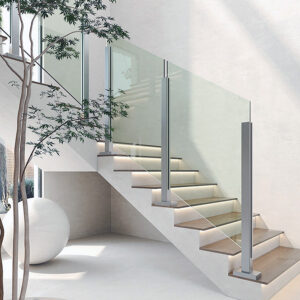
Material grade alone is not enough. The physical design of the hardware must be engineered for coastal loads. A critical, often overlooked proxy for stability is the net weight and solidity of components like glass spigots. Lightweight, minimally designed hardware may not withstand the constant lateral pressure and wind loads prevalent in coastal settings. The hardware must be a robust, integral part of the structural system.
| Component Category | Specific Examples | Critical Consideration |
|---|---|---|
| Structural Framing | Posts, top rails | Primary cost driver |
| Glass Hardware | Spigots, clamps | Must be robust design |
| Fasteners | Anchor bolts, screws | Single point of failure |
| Finishing Parts | Caps, handrails | Prevent galvanic corrosion |
Source: ASTM A276/A276M Standard Specification for Stainless Steel Bars and Shapes. This standard is critical for specifying the 316 stainless steel bar stock used to fabricate key structural components like railing posts, ensuring their material properties are suitable for coastal environments.
Installation & Compatibility with Coastal Building Codes
Navigating Code Mandates and System Integration
Local coastal building codes frequently mandate 316 stainless for structural railing components. Compliance requires verifying the specific code language for your project’s jurisdiction. Beyond material, the system’s engineering—post spacing, anchorage details, and load calculations—must be certified to meet regional wind and live load requirements for guardrails. The strategic solution to avoid hidden bottlenecks is sourcing a fully integrated system. Incompatibilities between handrail profiles and brackets, or between glass thickness and clip dimensions, cause costly field modifications and delays.
The Pre-Installation Verification Process
Successful installation begins long before the project reaches the site. It requires pre-verifying that all components are designed to work together as a tested assembly. This includes confirming that the specified glass railing hardware systems are compatible with the structural substrate (concrete, wood, steel) and that all fasteners are of the correct grade and length for the application.
| Compliance Area | Key Requirement | Strategic Action |
|---|---|---|
| Material Mandate | 316 for structural parts | Verify local code language |
| System Integration | Matched components | Source from single vendor |
| Engineering Certification | Meet wind/live loads | Secure load calculation reports |
| Hidden Bottleneck | Glass thickness match | Pre-verify clip dimensions |
Source: Technical documentation and industry specifications.
Long-Term Maintenance & Performance Expectations
Realistic Maintenance for Maximum Longevity
A correctly specified 316 stainless steel system is engineered for decades of service with minimal degradation. However, proactive maintenance optimizes performance and lifespan in harsh coastal zones. A simple, periodic rinse with fresh water removes salt deposits that can accumulate and challenge even the best materials. Annual inspections should check the tightness of all fasteners and clamps, as vibration and thermal cycling can cause slight loosening over time.
Setting Accurate Performance Expectations
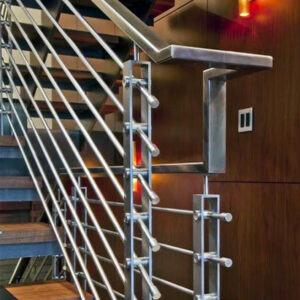
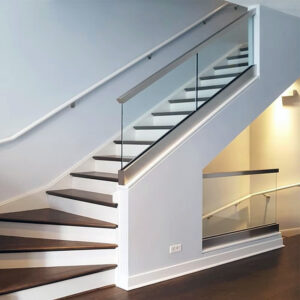
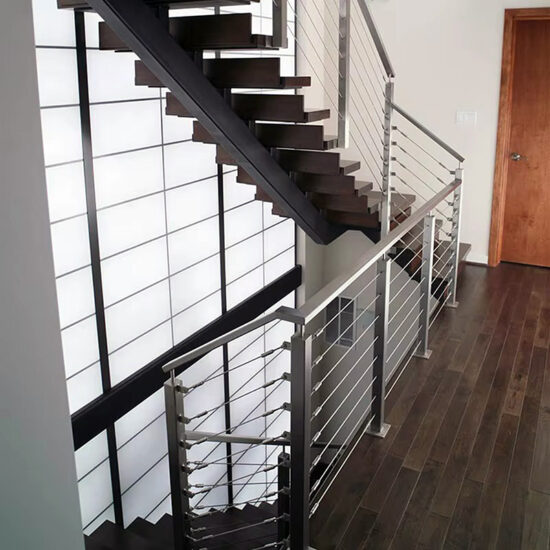
The expectation for a 316-grade system is enduring structural integrity and preserved aesthetics. This reliability informs broader design choices. For instance, some engineering-focused manufacturers advise against certain system types, like tensioned cable railings, in coastal zones. The rationale is that the design’s high surface area and numerous small-diameter components present a maintenance and corrosion risk profile that material grade alone cannot fully mitigate, favoring simpler, more monolithic glass railing designs.
Final Specification Checklist for Coastal Glass Railings
The Material and Documentation Audit
This consolidated checklist transforms technical imperatives into actionable specification items. First, mandate 316-grade for all metal components and secure material certifications from the supplier. Second, conduct a fastener audit, requiring that all anchor bolts and concealed screws comply with ISO 3506-1 for Grade A4 (316) mechanical properties. This verifies both corrosion resistance and strength.
The Supplier and System Qualification
The final, critical step is qualifying the supplier. Prioritize those with domestic engineering expertise, as their designs are often iterated based on direct feedback from harsh environments. Review their design history and insist on complete documentation, including load calculation reports and full-system compatibility guarantees.
| Checklist Item | Core Action | Verification Method |
|---|---|---|
| Material Grade | Specify 316 for all metal | Review material certifications |
| Fastener Audit | Mandate 316-grade bolts | On-site inspection |
| Hardware Robustness | Evaluate spigot weight | Check supplier specifications |
| Supplier Qualification | Prioritize domestic engineering | Review design iteration history |
Source: ISO 3506-1 Fasteners — Mechanical properties of corrosion-resistant stainless steel fasteners — Part 1: Bolts, screws and studs. This standard specifies the mechanical properties for stainless steel fasteners, ensuring that Grade A4 (316) bolts and screws used in the assembly have the necessary corrosion resistance and strength for coastal applications.
Specifying for coastal environments demands a disciplined, zone-based approach to material selection, with 316-grade stainless steel as the non-negotiable standard within salt air’s reach. The decision framework must prioritize full-system compatibility—from structural posts to the last fastener—and secure engineering documentation that meets local code loads. The goal is a single, integrated assembly, not a collection of parts.
Need professional guidance for your next coastal glass railing project? The engineering-focused team at Esang specializes in durable, code-compliant railing solutions designed for harsh environments. Contact us to discuss your project specifications or for detailed technical support.
Frequently Asked Questions
Q: How far inland should we specify 316 stainless steel for coastal glass railings?
A: Use a zone-based model for specification. Projects within one mile of the coast require 316-grade, often mandated by code for direct salt spray exposure. For installations up to ten miles inland, 316 remains the prudent standard due to salt air travel and micro-environments. Beyond ten miles, 304 may suffice, but 316 is still specified for maximum longevity. This means specifiers should adopt conservative supplier guidelines or local corrosivity maps to mitigate liability from ambiguous “coastal” definitions.
Q: What is the total cost impact of choosing 304 over 316 stainless steel in a corrosive zone?
A: The initial 20-40% premium for 316-grade protects against far higher lifecycle costs. Using 304 in corrosive zones risks premature failure of the structural post-and-rail framework, which is the primary cost driver. This failure necessitates expensive full-system replacement and creates safety liabilities. For projects within salt air’s reach, investing in 316 safeguards the substantial value of the glass infill itself. If your project is coastal, the higher upfront material cost is a direct investment in avoiding exponential future expenses.
Q: Why is specifying 316-grade for all fasteners and anchors non-negotiable?
A: Structural integrity depends on the weakest link. Using 316 for visible posts with inferior fasteners creates a critical vulnerability, as anchor bolts are a common single point of failure. The molybdenum in 316 provides essential resistance to chloride-induced pitting and crevice corrosion at all junctions. For securing the assembly, use fasteners compliant with ISO 3506-1, specifically Grade A4 for molybdenum-containing steels. This means a complete material audit, including concealed hardware, is mandatory for a reliable coastal system.
Q: How do we ensure hardware compatibility and avoid installation bottlenecks for a coastal railing system?
A: The strategic solution is sourcing a fully integrated, pre-engineered system from a single vendor. Hidden bottlenecks arise from mismatched components, such as handrail shapes requiring specific brackets or glass thickness not matching clip dimensions. Procuring posts, hardware, and glass as a compatible set avoids costly field modifications and delays. For projects with complex designs, plan to prioritize suppliers offering domestic engineering support for systems iterated specifically for harsh coastal loads and conditions.
Q: What long-term maintenance should we expect for a 316 stainless steel glass railing by the ocean?
A: A correctly specified system delivers decades of service with minimal, simple upkeep. Periodic rinsing with fresh water removes accumulated salt deposits that can challenge the protective passive layer. Annual inspections should verify the tightness of all clamps and fasteners to maintain structural stability under lateral loads. This means even premium 316-grade installations require a basic maintenance plan, but the performance expectation is enduring integrity without significant degradation or aesthetic compromise.
Q: Which material standards are critical for specifying 316-grade stainless steel components?
A: Key standards govern different product forms. For plate, sheet, and strip used in fabricating components, refer to ASTM A240/A240M for chemical composition and mechanical properties. For solid bar stock used in posts and structural supports, specify according to ASTM A276/A276M. This means your project documentation and supplier requirements must explicitly call out these standards alongside the 316 grade to ensure material quality and traceability for all primary components.