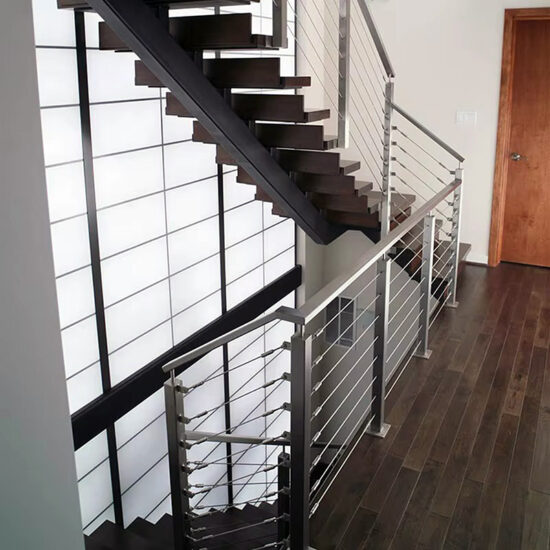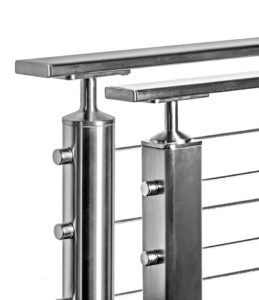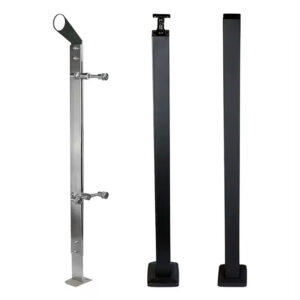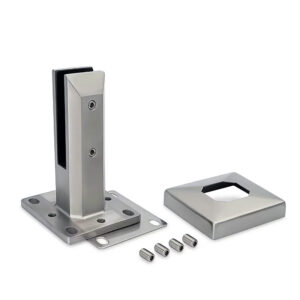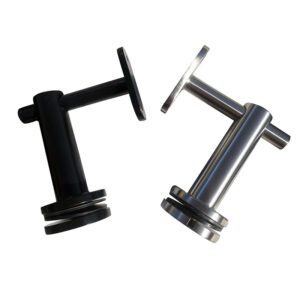
Specifying a stainless steel staircase banister for a commercial project involves navigating a complex matrix of safety, accessibility, and structural codes. The most common compliance error is assuming a single top rail can satisfy both guard and handrail requirements, leading to costly redesigns and permit rejections. This misconception stems from a fundamental misunderstanding of the distinct roles these components play in the International Building Code (IBC).
Achieving compliance is not merely about selecting a durable material; it’s a rigorous engineering exercise in system design, load transfer, and local code verification. With the IBC serving as a model code subject to local amendments, a banister that passes inspection in one jurisdiction may fail in another. This guide breaks down the critical IBC sections, providing a framework for specification that prioritizes safety, durability, and approval.
Understanding IBC Guard vs. Handrail Requirements
Defining Distinct Safety Functions
The IBC establishes separate but often integrated systems for guards and handrails. Guards, mandated by Section 1013.3 for any walking surface over 30 inches high, function as a barrier to prevent falls. Their primary requirement is a minimum 42-inch height. Handrails, governed by Section 1014.2, provide graspable support for stability and must be installed between 34 and 38 inches above the walking surface. This creates a critical design challenge: a single top rail cannot simultaneously satisfy both the 42-inch guard height and the 34-38 inch handrail height.
The Mandate for a Two-Rail System
Therefore, a compliant commercial stainless steel banister typically requires a two-rail system. This separation addresses a multi-code labyrinth where ADA accessibility standards for handrails and OSHA requirements further complicate the height matrix. Designing dual-purpose systems or separate components from the outset is essential. In my experience, projects that attempt to value-engineer this separation during construction face significant delays and change orders, as retrofitting a proper handrail onto an existing guard is rarely straightforward or cost-effective.
The Compliance Matrix in Practice
The table below clarifies the distinct roles and requirements, highlighting the fundamental design implication.
| Component | Primary Function | IBC Height Requirement |
|---|---|---|
| Guard | Fall prevention | 42 inches minimum |
| Handrail | Graspable support | 34 to 38 inches |
| Key Design Implication | — | — |
| Single top rail | Cannot satisfy both | Separate system required |
Source: IBC Section 1014 Handrails. This code section defines the specific height range for handrails, which is distinct from guard height requirements, necessitating a two-rail system for full compliance.
Key IBC Load Requirements: Concentrated & Uniform Loads
The Non-Negotiable Load Standards
Structural integrity under load is paramount. IBC Section 1607.8 mandates that guards and handrails withstand a 200-pound concentrated load applied in any direction. For guards, an additional uniform load of 50 pounds per linear foot applied to the top rail is required. These are not theoretical values but represent real-world forces from human impact and leaning. The choice of stainless steel, with its high strength-to-weight ratio, is well-suited, but the material alone does not guarantee compliance.
The Hidden Critical Point: Anchorage
These requirements force engineering focus beyond the visible railing to its hidden structural demands—the anchoring system. A railing can pass muster while its attachments to the deck or stair structure fail, creating a critical latent point of failure. This makes compliance verification a system-wide review, demanding collaboration between railing manufacturers and structural engineers. The design, weld quality (often per AWS D1.6), and anchorage details are paramount to safely transfer these forces into the building substrate.
Ensuring System-Wide Integrity
The following table outlines the load requirements and directs focus to the most common failure point.
| Load Type | IBC Requirement (Section 1607.8) | Application Direction |
|---|---|---|
| Concentrated Load | 200 pounds | Any direction |
| Uniform Load (Guards) | 50 lbs/linear foot | Applied to top rail |
| Critical Focus | — | — |
| System Integrity | Anchorage & welds | Must transfer all loads |
Source: Technical documentation and industry specifications.
How to Design for Graspability, Clearance, and Continuity
Engineering the Power Grip
Handrail geometry is ergonomically engineered. IBC Sections 1014.3-1014.6 specify precise parameters to ensure a functional “power grip.” Circular handrails must have an outside diameter between 1¼ and 2 inches, while non-circular shapes require a specific perimeter and finger recess. A minimum 1½-inch clearance from walls is mandated to facilitate proper hand placement. Value engineering that alters these dimensions compromises fundamental usability and safety, potentially violating accessibility standards.
Mandating Continuity for Safe Transitions
Furthermore, handrails must be continuous and extend horizontally at the top and along the stair slope at the bottom for safe transitions. These extensions guide users and are critical for compliance, meaning the banister design must account for these runs beyond the immediate stair flight. This continuity requirement often conflicts with aesthetic desires for clean breaks or decorative newel posts, necessitating early design resolution.
Specifications for Usability
The technical criteria for handrail design are summarized below, ensuring both code compliance and user safety.
| Parameter | IBC Specification (Sections 1014.3-1014.6) | Key Design Consideration |
|---|---|---|
| Circular Handrail Diameter | 1¼ to 2 inches | Outside dimension |
| Wall Clearance | 1½ inches minimum | For finger placement |
| Handrail Continuity | Required with extensions | Top & bottom transitions |
Source: ANSI A117.1 Accessible and Usable Buildings and Facilities. This standard provides the foundational technical criteria for handrail geometry and clearance to ensure usability, which are incorporated by reference into the IBC.
Navigating Guard Opening Limits and Infill Options
The 4-Inch Sphere Rule
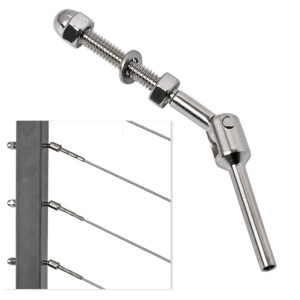
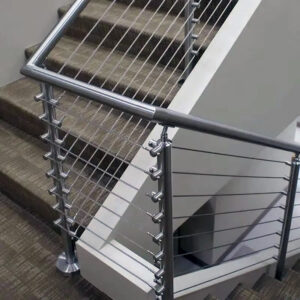
Guard infill design is governed by the critical 4-inch sphere rule (IBC 1013.4) to prevent child passage. This dictates maximum spacing for balusters or cables. For designers, this rule is the primary constraint dictating the density and pattern of vertical elements. It applies not just between balusters but also at the base and top of the guard system, where a sphere must not pass through any opening.
The Unique Case of Glass Railings
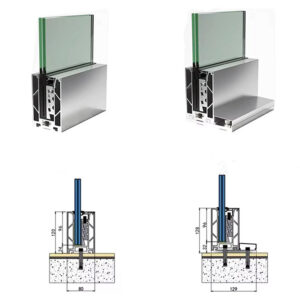
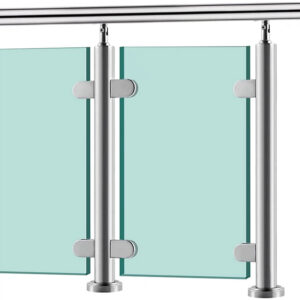
For glass railings, this rule introduces unique fragmentation risks. The IBC mandates laminated glass to prevent shattering upon impact and typically requires a top rail unless the glass assembly meets specific impact-testing standards (ASTM). This highlights that glass railing compliance is uniquely focused on containing glass fragmentation as a secondary hazard beyond fall prevention. Specifying monolithic glass or improper lamination introduces unacceptable projectile risks.
Compliance Factors by Infill Type
Selecting an infill type requires understanding its specific compliance pathway, as shown in the table.
| Infill Type | Governing Rule | Critical Compliance Factor |
|---|---|---|
| Balusters/Cables | 4-inch sphere rule | Maximum opening size |
| Glass (Laminated) | ASTM impact standards | Prevents glass shattering |
| Glass (Monolithic) | Typically not compliant | High fragmentation risk |
Source: IBC Section 1013 Guards. This section establishes the 4-inch sphere rule for guard openings to prevent child passage and references safety standards for materials like glass.
Stainless Steel Material Selection and Fabrication Standards
From Aesthetic to Risk Management
Material specification directly mitigates long-term liability. While the IBC is performance-based, successful systems use grades like Type 304 or 316 stainless steel for their inherent corrosion resistance, which addresses durability mandates in harsh or coastal environments. This shifts material selection from an aesthetic choice to a core risk management strategy. Specifying sub-par, coated alternatives to cut initial costs exponentially increases future legal and insurance risks from degradation.
The Value of Pre-Engineered Systems
The industry trend toward pre-engineered, code-compliant kits from manufacturers represents a strategic de-risking standard. These turnkey solutions, with provided engineering drawings and load certifications, effectively outsource compliance assurance and shift liability. For complex projects, partnering with a specialist who provides engineered stainless steel railing systems can streamline the entire specification and approval process.
Grades and Fabrication Benchmarks
The choice of material grade and fabrication method defines long-term performance, as outlined below.
| Material Grade | Typical Application | Primary Benefit |
|---|---|---|
| Type 304 Stainless | Standard interiors | Good corrosion resistance |
| Type 316 Stainless | Coastal/harsh environments | Superior corrosion resistance |
| Fabrication Standard | — | — |
| Weld Quality | AWS D1.6 | Ensures structural integrity |
Source: Technical documentation and industry specifications.
The Critical Role of Local Amendments and the AHJ
The Model Code Reality
The IBC is a model code, and its final, enforceable version is set by the local Authority Having Jurisdiction (AHJ). This creates a compliance patchwork where cities may amend requirements—for example, mandating taller railings for wind loads or specific materials for seismic zones. This transforms national compliance into a hyper-local verification challenge for every project.
Mandating the AHJ Review Phase
Consequently, project timelines and budgets must include a mandatory AHJ review phase before finalizing design. This step validates all material and dimensional specifications against municipal amendments, preventing costly revisions. I’ve seen projects stalled because a railing system, compliant with the base IBC, failed to meet a local amendment requiring a 44-inch guard height in specific occupancies. Early engagement is non-negotiable.
Common Compliance Pitfalls and How to Avoid Them
Misunderstanding Integrated Requirements
Common pitfalls stem from misunderstanding integrated requirements. A major error is designing a single rail at 42 inches and assuming it can also serve as the handrail, which violates handrail height rules. Another is focusing on rail strength while neglecting anchor design into potentially weak substrates like hollow-core plank or lightweight concrete. The drive for aesthetic minimalism, such as cable or glass systems, increases engineering scrutiny as it removes redundant structural elements.
The Inverse Relationship of Simplicity
This creates an inverse relationship where visual simplicity demands more rigorous engineering and premium materials. Avoiding these pitfalls requires early collaboration with engineers, selecting proven pre-engineered systems, and never value-engineering critical grip dimensions or material grades. The assumption that “stainless steel is strong enough” is a starting point, not a completed engineering analysis.
A Step-by-Step Framework for Specification and Approval
A Disciplined Five-Step Process
A disciplined framework ensures compliance and streamlines approval. First, confirm all dimensional parameters (heights, extensions, spacings) with the local AHJ, accounting for amendments. Second, select materials (e.g., Type 316 stainless for coastal sites) and infill types that meet both code and environmental demands. Third, engage with manufacturers who provide engineered system drawings and certified load calculations for the specific assembly.
Documentation and Submission
Fourth, detail anchorage requirements in collaboration with the structural engineer to ensure the substrate can handle the loads. Finally, submit comprehensive documentation—including cut sheets, engineering stamps, and material certifications—for permit approval. This process leverages industry shifts toward digital integration, where future tools will validate specs against geographic code profiles, further de-risking specification.
Successful compliance hinges on treating the banister as an engineered system, not a decorative component. Prioritize the AHJ review and substrate anchorage analysis from the earliest design phases. Never compromise on handrail graspability dimensions or material grades for corrosive environments; these are fixed points in the specification.
Need professional guidance to navigate IBC compliance for your next project? The experts at Esang provide engineered solutions and specification support to ensure your stainless steel staircase systems meet all safety, accessibility, and local code requirements.
Frequently Asked Questions
Q: Can a single top rail on a commercial staircase satisfy both guard and handrail height requirements?
A: No, a single rail cannot meet both codes simultaneously. IBC Section 1013 mandates a 42-inch minimum guard height for fall protection, while IBC Section 1014 requires handrails for graspable support between 34 and 38 inches. This creates a mandatory design separation, requiring a two-rail system. This means your specification must plan for distinct components from the outset to avoid non-compliant redesigns that compromise both safety and accessibility.
Q: What are the critical structural load tests for a stainless steel guardrail system?
A: The IBC requires guards to withstand a 200-pound concentrated load applied in any direction and a uniform load of 50 pounds per linear foot. These forces test the entire assembly, including welds and, crucially, the anchorage to the building structure. For projects where the substrate is a potential weak point, you must collaborate with a structural engineer during design to verify the attachment details can transfer these loads safely.
Q: How do you design a handrail profile to meet code for graspability?
A: Handrail profiles are strictly regulated for ergonomics. Circular sections must have an outside diameter between 1¼ and 2 inches, while non-circular shapes require a specific perimeter and finger recess. A minimum 1½-inch clearance from any adjacent wall is also mandated. If your design prioritizes a specific aesthetic, you must ensure the chosen profile and mounting details comply with these dimensional rules in IBC Section 1014 and accessibility standards like ANSI A117.1.
Q: What are the compliance risks when specifying glass infill for a guard system?
A: Glass infill introduces unique hazards beyond fall prevention. The IBC’s 4-inch sphere rule still applies, but a primary concern is glass fragmentation upon impact. Code typically requires laminated glass and often a top rail unless the assembly passes specific impact tests per ASTM standards. This means specifying monolithic glass or improper lamination creates an unacceptable projectile risk, making certified suppliers and documented test compliance non-negotiable for these systems.
Q: Why is local AHJ review a critical step in the specification process?
A: The International Building Code is a model that local Authorities Having Jurisdiction (AHJ) can amend. Municipalities may enforce stricter requirements, like taller railings for wind loads or specific materials in seismic zones. This transforms national code compliance into a hyper-local verification challenge. For every project, you must budget time for an AHJ review phase before finalizing design to validate all specifications against the actual enforceable code, preventing costly revisions.
Q: How does selecting a pre-engineered stainless steel railing system de-risk a project?
A: Pre-engineered, code-compliant kits from manufacturers provide certified load calculations and engineered drawings for the complete assembly. This effectively outsources critical compliance assurance and shifts associated liability. For projects with tight timelines or limited in-house engineering resources, specifying these turnkey solutions is a strategic move that mitigates the risk of latent design failures in anchoring or load transfer.
Q: What is a common material selection mistake for stainless steel railings in harsh environments?
A: A major error is specifying lower-grade or coated carbon steel as a cost-saving alternative to austenitic stainless steels like Type 316. While the IBC is performance-based, material durability is a core risk management issue. In coastal or harsh environments, this choice exponentially increases long-term liability from corrosion-induced degradation and potential failure. This means your material specification must treat corrosion resistance as a non-negotiable safety factor, not an aesthetic preference.