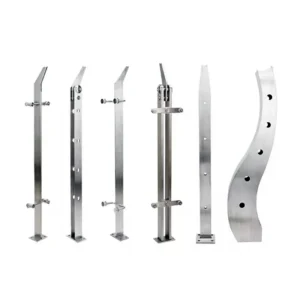
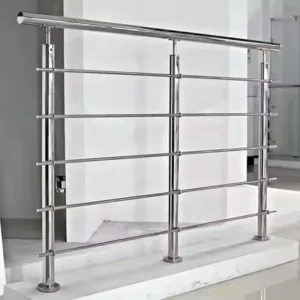
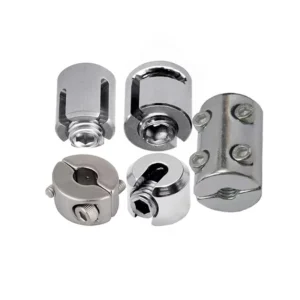
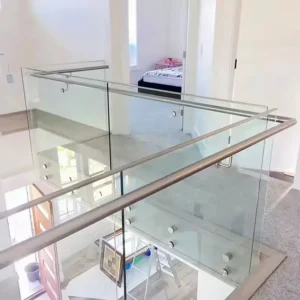
A custom railing bracket or fitting arrives from the supplier looking correct, matching the finish sample, feeling solid in hand. Should that be enough to release the production run? The gap between an approved-looking sample and a sample that actually confirms the part will function in the installed assembly is where procurement teams either catch a mismatch early or inherit it at the jobsite.
Set the sample purpose and approval stage before production
| Sample purpose | Approval focus | Production-release boundary |
|---|---|---|
| Appearance prototype | Surface appearance against the stated material, finish, and process state | Appearance approval alone does not approve dimensions, interfaces, assembly fit, or production release |
| Production reference sample | Part identity, drawing revision, material, finish, process state, packaging status, mating interfaces, and trial fit with the intended assembly | It may support production release only when accepted in a signed record; later design or process changes trigger reapproval |
Before a sample reaches an approver’s desk, the first judgment is not whether the part looks right but what the sample was made to prove. A sample produced to confirm surface appearance answers a narrower question than a sample produced to stand in for the part that will ship in volume. Treating these as the same decision is where approval records lose their value later.
An appearance prototype exists to confirm that a visible surface condition, a finish tone, or a texture matches what was specified. It may be built from a different process state than production intends, or it may omit features that do not affect how the surface reads. Approving it tells the buyer that the material and finish direction is correct. It does not tell the buyer that the mounting holes land where the drawing places them, that the part will seat against its mating component, or that the process used to make it is the process that will run at volume.
A production reference sample carries a different burden. It is meant to represent, as closely as the supplier and buyer agree, the part that production will replicate: same drawing revision, same material and finish, same process state, and in cases where packaging affects the part’s condition on arrival, the same packaging status. Because it stands in for the eventual production part, its approval can carry weight that an appearance prototype’s approval cannot.
The distinction matters most at the moment a buyer decides whether an approved sample is sufficient to authorize production. If the sample on file is an appearance prototype, that approval supports a finish and material decision, not a release decision. If the sample on file is a production reference sample accepted against its full identity and fit, that approval can support release, provided the acceptance was recorded rather than assumed. Where a project later changes a dimension, a process step, or a finish parameter after a sample was accepted, the original approval no longer covers the changed part, regardless of which type of sample it was. The approval stage, not the sample’s appearance, determines what the sign-off actually means.
Link each sample to the part number, drawing revision, material, and finish
A sample that is not explicitly tied to a part number and a specific drawing revision is a sample that cannot be defended later if a dispute arises over what was approved. Railing hardware projects frequently carry parts through multiple drawing revisions as dimensions, mounting details, or finish callouts are adjusted during specification. If the sample approved early in the project is not recorded against the revision it represents, a later revision can be built, shipped, and installed without anyone confirming that the approved sample still matches what the drawing now calls for.
The identifying information that should travel with every sample includes the part number, the drawing revision in effect at the time the sample was produced, the material specified, the finish specified, and where applicable, the process state and packaging status the sample represents. Each of these is a separate variable that can change independently of the others. A supplier might hold the part number and drawing constant while adjusting a finish process, or hold the finish constant while a dimensional revision changes a mounting feature. Without recording all of these together, an approval cannot show which combination was actually accepted.
This linkage becomes most consequential when a project runs long enough for a specification to be revised after initial sample approval, or when a buyer sources the same part across multiple orders separated in time. A sample approved against one drawing revision does not carry forward automatically to a later revision, even where the visible difference between revisions is small. The buyer’s recourse if a mismatch surfaces at installation depends entirely on whether the original approval record specifies exactly what was approved. Procurement and quality teams evaluating a supplier’s sample process should confirm that each sample is issued with its full identifying record attached, not as a separate reference document that can become disconnected from the physical sample over time.
Inspect mating dimensions, mounting interfaces, appearance, and assembly fit
| Inspection area | Evidence to check | Decision use |
|---|---|---|
| Mounting interfaces | Exact drawing and the intended assembly | Determine whether the sample interface matches both the drawing and its assembly context |
| Holes and threads | Exact drawing and mating interfaces | Determine whether these features match the defined mounting relationship |
| Mating dimensions | Exact drawing and trial fit with the intended assembly | Determine whether the sample supports the intended mating relationship |
| Surface appearance | Stated material, finish, and process state | Determine whether appearance matches the defined sample state; appearance alone does not establish assembly fit |
| Assembly trial fit | Intended assembly | Determine whether the sample fits that assembly; this does not prove system load performance or code compliance |
Approving a sample on appearance alone leaves the dimensional and interface questions unanswered, and those are the questions most likely to surface as installation problems rather than as sample-review findings. A railing bracket, connector, or fitting functions inside an assembly; its value to the buyer depends on how it interfaces with the parts around it, not on how it looks in isolation.
Mounting interfaces, including holes and threads, need to be checked against both the exact drawing and the intended assembly, because a feature can match the drawing’s stated dimension while still failing to engage correctly with the mating part if the drawing itself did not fully capture the assembly relationship. This is why trial fit with the intended assembly carries different evidentiary weight than a dimensional check against the drawing alone: the drawing confirms the part was made to specification, while the trial fit confirms that the specification produces a working assembly.
Mating dimensions deserve the same layered check. A dimension that measures correctly on an inspection report can still fail to produce the intended fit if an adjoining part’s tolerance stacks unfavorably, which is why trial fit with the actual mating components, where available, gives information that a dimensional report alone cannot.
Surface appearance remains a legitimate and necessary check, but it answers a narrower question: whether the sample matches the stated material, finish, and process state. It does not establish whether the part will seat, align, or carry load correctly in the assembly. Where a reviewer approves a sample on appearance and treats that as sufficient, the dimensional and interface risks carry forward unexamined into production. Where the reviewer separates these checks, appearance approval and fit approval can be recorded as what they are, and a failure in one does not get mistaken for success in the other.
Separate sample acceptance from system performance and code approval
| Approval question | Evidence basis | What the decision establishes |
|---|---|---|
| Does the sample match its stated design and build definition? | Signed sample acceptance covering the part number, drawing revision, material, finish, process state, packaging status, interfaces, dimensions, appearance, and trial fit | Acceptance of that sample against the stated basis |
| Does the final assembly meet system load performance? | Final assembly and project evidence | A project-specific performance decision; sample acceptance does not prove it |
| Does the final assembly satisfy code approval? | Final assembly and project evidence | A project-specific code decision; sample acceptance does not prove it |
Accepting a sample answers a specific and limited question: does this physical part match its stated design and build definition, including its part number, drawing revision, material, finish, process state, packaging status, interfaces, dimensions, appearance, and trial fit. That acceptance does not extend to whether the final installed assembly will meet system load performance or satisfy code approval, because those are judgments about the completed assembly in its project context, not about a single component sample.
This separation exists because a component can match its sample in every respect the sample was built to represent, while the assembly it becomes part of depends on additional factors the sample cannot carry: the structural design of the full railing system, the interaction between multiple components and substrates, the installation method used on site, and the project-specific loading and code requirements that apply to the completed work. ISO 10474, which addresses inspection documents supplied for steel and steel products according to order requirements, illustrates this boundary from the material side: the inspection document types it describes confirm what was delivered against order requirements, not that the completed assembly meets a performance or code standard. A document confirming material inspection is not, by itself, evidence of assembly-level compliance.
Submittal structures built around project-specific specifications, such as the organization reflected in UFGS 05 52 00 for metal railings, show the same separation in a different form: a project specification can define what submittals and approvals are required for the railing work, without any single submittal substituting for the others. That structure is useful as an illustration of how approval stages are organized on a project, not as a requirement that applies to this article’s reader by default.
The practical consequence is that a signed sample acceptance and a project’s load or code approval remain two distinct evidentiary records. A buyer who treats sample acceptance as proof of system performance has conflated a component-matching decision with an assembly-performance decision that depends on project-specific engineering and code evidence the sample was never built to provide. Where that project evidence does not yet exist, the sample acceptance record should state plainly what it covers, so that gap is visible rather than assumed away. ESANG’s role in supplying project-matched hardware does not itself establish that the completed assembly satisfies load or code requirements; that confirmation depends on the final assembly and the project’s own evidence.
Release production against a signed acceptance record
Once the sample type, its identity, and its inspection findings are established, the remaining decision is whether a signed acceptance record exists that actually authorizes release. An unsigned approval, a verbal confirmation, or an email thread without a clear acceptance statement leaves the production release resting on an informal understanding that is difficult to recover if a later dispute asks what was approved and by whom.
The signed record functions as the boundary between sample review and production commitment. It should reflect the sample’s full identity, the inspection findings against mating dimensions, mounting interfaces, and appearance, and an explicit statement of acceptance rather than an inference drawn from the absence of objections. Where the record is silent on any of these points, the release decision rests on assumptions rather than evidence, and those assumptions are exactly what surface as disputes when a production lot does not match expectations.
The record’s second function is to define the conditions under which it stops applying. A signed acceptance covers the part as sampled, against the drawing revision and process state in effect at that time. Where a design change, a process adjustment, or a specification revision occurs after acceptance, the original signed record no longer covers the changed part, and a new approval cycle applies to whatever changed. Building this reapproval trigger into the acceptance record, rather than leaving it to be inferred later, is what allows a buyer to track which version of a part is actually authorized for production at any point in a project.
For a buyer coordinating this process with a supplier, the project details supplied during specification and quotation, including the drawing revision, material, finish, and application context, are the same details that should appear in the eventual sample acceptance record, keeping the configuration reviewed at quotation stage consistent with the configuration approved for production. Where a project’s hardware needs vary by application, as described under application-specific solutions, the same identification and acceptance discipline applies regardless of which component family is involved: the record’s job is to state exactly what was approved, so that production release depends on evidence rather than resemblance.
Frequently Asked Questions
Q: What should be defined before requesting a custom railing hardware approval sample?
A: Define the sample purpose, part number, drawing revision, material, finish, process state, packaging status, and intended assembly. This gives the approver a specific basis for checking the sample and prevents an appearance review from being mistaken for full production approval.
Q: Can an appearance prototype be used to release production?
A: No. An appearance prototype supports a surface-appearance decision only. Production release requires a production reference sample accepted against the applicable dimensions, interfaces, assembly fit, and other stated build details in a signed record.
Q: What happens if the design or manufacturing process changes after sample approval?
A: Treat the change as a reapproval trigger. Identify the new drawing revision or process state and repeat the affected checks so the production reference remains tied to the version that will actually be made.
Q: Does a successful trial fit confirm railing load performance or code approval?
A: No. Trial fit shows whether the sample works with the intended mating assembly for that fit check. Load performance and code approval still require evidence for the final assembly and the specific project.
Q: Does a steel inspection document prove that the custom sample conforms?
A: No. The required inspection-document type can be set by the order, but the document alone does not establish traceability, test validity, grade conformity, or certificate authenticity. Check those items separately and keep the signed sample-acceptance record tied to the exact part and revision.