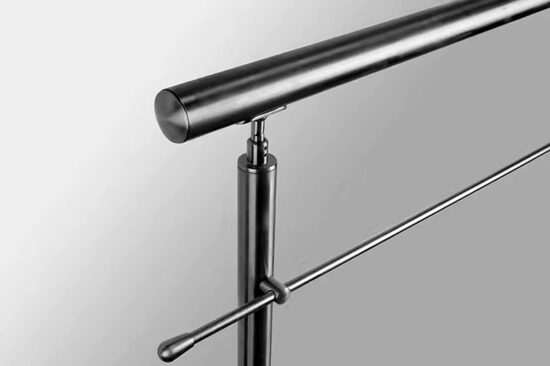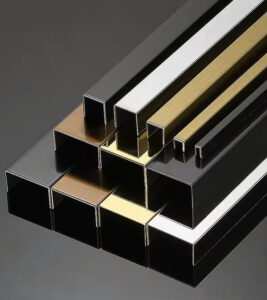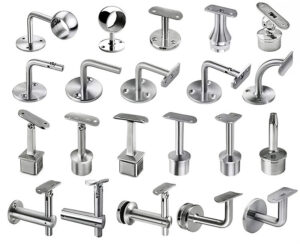
Specifying handrail materials is a foundational decision in commercial and institutional construction. The choice between 304 stainless steel and alternatives like 316 or powder-coated carbon steel is often oversimplified to a basic cost comparison. This leads to misapplication, premature failure, or unnecessary capital expenditure. A precise understanding of 304’s properties and environmental limits is critical for achieving durable, code-compliant, and cost-effective installations.
The financial and operational stakes are high. Selecting the wrong material for the environment incurs significant lifecycle costs from maintenance, repair, and replacement. For specifiers, architects, and facility managers, a rigorous, data-driven approach to material selection is no longer optional. It’s a core responsibility that impacts project longevity, safety, and total cost of ownership.
What Is 304 Stainless Steel & Its Core Properties?
Defining the 18-8 Alloy
304 stainless steel is an austenitic alloy defined by its “18-8” composition: approximately 18% chromium and 8% nickel. The chromium is the critical element, reacting with oxygen to form a self-repairing, invisible passive layer that provides the primary defense against rust and corrosion. Nickel enhances the alloy’s formability, ductility, and toughness. This specific metallurgical profile creates an optimal balance of corrosion resistance, mechanical strength, and workability for general-purpose applications.
Performance and Sustainability Drivers
The performance of 304 is inherently tied to its chemistry, which provides robust protection in typical indoor and mild outdoor atmospheres. Its 100% recyclability and exceptionally long service life align with growing sustainability mandates in modern construction. This offers tangible advantages for projects pursuing LEED or other green building certifications, moving the value proposition beyond simple material cost to encompass environmental impact and lifecycle assessment.
Ideal Applications & Environmental Suitability
Premier Interior Applications
For high-traffic interior handrail systems in commercial offices, airports, shopping malls, healthcare facilities, and educational institutions, 304 stainless steel is the premier choice. Its inherent durability against constant human contact, oils, and cleaning agents, combined with its ease of sanitization, validates its specification despite a higher initial cost than coated alternatives. In my experience, the reduced long-term maintenance burden in these settings consistently justifies the upfront investment.
The Exterior Niche and Risk Audit
For exterior use, 304’s suitability is explicitly defined by low-corrosion environments, such as covered walkways, canopied building entries, or sheltered balconies. A critical strategic implication is that environment is a spectrum, not a binary. Specifiers must move beyond the “indoor vs. outdoor” label to conduct a rigorous micro-environment audit. This audit must identify potential chloride sources like de-icing salts, coastal salt spray, industrial pollution, or pool chemicals. Misapplication in these aggressive settings guarantees premature pitting and failure, representing a significant latent liability and cost in incorrectly specified projects.
304 vs. 316 Stainless Steel: Key Differences & Cost
The Molybdenum Difference
The fundamental difference between 304 and 316 stainless steel is the addition of 2-3% molybdenum in grade 316. This alloying element dramatically enhances resistance to chlorides and acidic environments, making 316 necessary for harsh settings like coastal areas, chemical processing plants, or installations near swimming pools. For standard indoor or protected outdoor applications, 304 provides entirely adequate corrosion resistance.
A Strategic Specification Decision
Specifying 316 where it is not functionally required represents an unnecessary cost premium, directly impacting project budgets. Conversely, under-specifying 304 in a chloride-rich environment is a costly error. This decision matrix underscores the value of consultative suppliers who provide environmental assessment guidance and total cost of ownership modeling, rather than just product supply.
Comparative Analysis for Clarity
The following table clarifies the key operational and cost distinctions between these two common grades, providing a clear framework for the initial selection.
| Feature | 304 Stainless Steel | 316 Stainless Steel |
|---|---|---|
| Key Alloying Element | 18% Chromium, 8% Nickel | Adds 2-3% Molybdenum |
| Corrosion Resistance | Excellent for indoor/mild | Superior, resists chlorides |
| Ideal Environment | Indoor, sheltered outdoor | Coastal, chemical, pools |
| Relative Material Cost | Lower cost | Higher cost premium |
| Specification Guidance | Standard commercial interiors | Harsh/chloride-rich environments |
Source: Technical documentation and industry specifications.
304 Stainless Steel vs. Powder-Coated Carbon Steel
The Initial Cost vs. Long-Term Value Trade-Off
The choice between 304 stainless and powder-coated carbon steel is a classic capital expenditure versus operational expenditure trade-off. Carbon steel has a lower upfront material cost but relies entirely on the integrity of its powder coating to prevent rust. Once this coating is compromised—through impact, abrasion, or UV degradation—the substrate will corrode.
Durability in High-Traffic Scenarios
In high-traffic indoor environments like airports or hospitals, frequent contact accelerates coating wear. This demands constant touch-ups and periodic full refinishing, increasing lifetime maintenance labor and operational downtime. This often invalidates carbon steel’s initial value proposition for public interiors. 304 stainless, with its inherent corrosion resistance and no need for a protective coating, offers superior durability with minimal, non-invasive upkeep.
Evaluating Through a TCO Lens
A disciplined evaluation requires a total cost of ownership lens. The table below contrasts the cost components, demonstrating how long-term savings in maintenance often favor 304 stainless for commercial projects.
| Decision Factor | 304 Stainless Steel | Powder-Coated Carbon Steel |
|---|---|---|
| Initial Material Cost | Higher upfront | Lower upfront |
| Long-Term Maintenance | Minimal cleaning only | Frequent coating touch-ups |
| Durability in High-Traffic | High, inherent resistance | Lower, coating wears |
| Total Cost of Ownership | Lower over 20-30 years | Higher due to upkeep |
| Operational Downtime | Minimal | Significant for refinishing |
Source: Technical documentation and industry specifications.
Maintenance, Cleaning, and Finish Selection Guide
Routine Cleaning Protocols
Maintenance for 304 stainless steel is straightforward but material-specific. Routine cleaning involves warm water and a mild, non-chlorinated detergent, followed by rinsing and drying with a soft cloth. Harsh cleaners, bleach, or abrasive tools must be avoided as they can damage the passive chromium oxide layer, potentially inducing surface corrosion or unsightly scratching.
Finish as a Functional Decision
Crucially, finish selection is a functional, not just aesthetic, decision. A #4 satin (brushed) finish is highly recommended for handrails. Its directional grain effectively masks minor scratches, fingerprints, and handling marks, optimizing long-term appearance with minimal upkeep. A polished mirror finish, while offering a marginally smoother surface that can shed contaminants more easily, shows every blemish and scratch readily. Aligning finish choice with expected wear patterns and facility cleaning protocols is essential for sustainable performance.
Building Code Compliance & Load Specifications
Universal Safety Mandates
Compliance with building codes like the IBC and ADA is non-negotiable. 304 stainless steel readily meets material durability requirements for its suitable environments. Key universal mandates include a minimum height (typically 42″ for commercial, 36″ for residential), structural load resistance, and limits on opening sizes to prevent a 4-inch sphere from passing through, which is a critical safety provision for infill design.
Engineering the Complete System
While the material itself is code-compliant, the entire handrail system must be engineered to meet structural loads. This includes post spacing, anchoring methodology, and connection details. The complexity of aligning material, design, and code is driving the adoption of digital specification tools that can generate compliant 304 specifications from project parameters, reducing errors.
Key Structural Requirements
The following table outlines typical code-mandated load specifications that the handrail system assembly, utilizing materials like ASTM A554 compliant tubing, must be designed to withstand.
| Requirement | Typical Specification | Application Note |
|---|---|---|
| Handrail Height (Commercial) | 42 inches minimum | Universal mandate |
| Handrail Height (Residential) | 36 inches minimum | Universal mandate |
| Linear Load Resistance | 50 lbs per linear foot | Structural requirement |
| Concentrated Load | 200 lb point load | Structural requirement |
| Maximum Opening Size | Prevents 4-inch sphere passage | Safety infill design |
Source: ASTM A554 Standard Specification for Welded Stainless Steel Mechanical Tubing. This standard governs the mechanical properties and quality of the stainless steel tubing (including Grade 304) used to fabricate handrail systems, ensuring the material meets the strength requirements for code-compliant structural performance.
Lifecycle Cost Analysis & Total Cost of Ownership
Modeling Long-Term Economics
A rigorous lifecycle cost analysis reveals the true economic value of 304 stainless steel handrails. This model contrasts the higher initial purchase price against the minimal long-term costs of maintenance, repair, and replacement. For powder-coated carbon steel, the recurring need for coating repair and eventual full refinishing creates significant, predictable ongoing expenses and operational downtime.
The TCO Decision Framework
For 304 stainless in its suitable environments, the primary long-term cost is periodic cleaning. Over a standard 20-30 year building lifespan, this low upkeep typically results in a lower total cost of ownership. Decision-makers must therefore evaluate project lifespan and operational budgets, not just capital expenditure. This TCO perspective is decisive in high-traffic commercial interiors where durability and minimal disruption are paramount.
Quantifying the Cost Components
The comparative breakdown in this table provides a clear, quantitative foundation for the TCO discussion, moving the decision beyond anecdote.
| Cost Component | 304 Stainless Steel | Powder-Coated Carbon Steel |
|---|---|---|
| Initial Purchase Price | Higher | Lower |
| Long-Term Maintenance | Periodic cleaning only | Coating repair & refinishing |
| Repair/Replacement Cycle | Very long lifespan | Shorter, coating fails |
| Operational Labor Cost | Low | High |
| 20-30 Year TCO | Typically lower | Typically higher |
Source: Technical documentation and industry specifications.
How to Specify 304 Stainless Steel Handrails
A Disciplined Five-Step Framework
Successful specification requires a disciplined, multi-factor approach to ensure performance and value. First, rigorously confirm the environment is indoor or a protected outdoor area with minimal chloride exposure. Second, specify a #4 satin finish for the optimal balance of aesthetics and practical maintenance. Third, ensure the complete system design is engineered for local building code load and safety requirements.
Integrating Specification with Operations
Fourth, incorporate simple, non-abrasive cleaning instructions into the facility’s operational manuals to preserve the material. Finally, base the final material selection on a total cost of ownership analysis that accounts for the full project lifespan. By following this framework, 304 stainless steel delivers a reliable, cost-effective solution where environmental conditions align with its inherent properties.
The specification process hinges on matching material capability to environmental reality. Prioritize a TCO analysis over initial cost, select the #4 finish for durability, and engineer the system to meet code loads. This disciplined approach mitigates risk and ensures long-term value. For projects where the environment aligns, 304 stainless steel provides a benchmark for performance. Need professional guidance on specifying the right handrail system for your next project? Consult with the experts at Esang to develop a solution that meets your technical, aesthetic, and budgetary requirements. Contact Us for a detailed consultation.
Frequently Asked Questions
Q: When should we specify 304 stainless steel over 316 for an exterior handrail project?
A: Choose 304 for exterior use only in low-corrosion, protected environments like covered walkways, where exposure to chlorides from de-icing salts or coastal spray is negligible. The 2-3% molybdenum in grade 316 provides essential chloride resistance that 304 lacks. For projects where budget is a primary constraint and the environment is truly mild, 304 offers a significant cost saving, but misapplication near coastal areas or pools guarantees premature failure and represents a latent liability.
Q: How does the total cost of ownership for 304 stainless steel compare to powder-coated carbon steel handrails?
A: A lifecycle cost analysis shows 304 stainless steel typically has a lower total cost of ownership over 20-30 years despite a higher initial price. Carbon steel incurs recurring costs for coating repair, full refinishing, and associated operational downtime, especially in high-traffic interiors. 304’s inherent corrosion resistance requires only periodic cleaning. This means facilities with high pedestrian traffic and long operational lifespans should prioritize 304 for its durability and minimal long-term upkeep expenses.
Q: What is the most practical finish for 304 stainless steel handrails in a commercial building?
A: A #4 satin (brushed) finish is the most practical and recommended choice for commercial handrails. Its directional grain effectively conceals minor scratches and fingerprints, which optimizes ease of maintenance and appearance over time. While a mirror polish offers marginally better corrosion resistance, it shows blemishes readily. For projects where minimizing long-term cleaning labor is a priority, the design team should specify the #4 finish and integrate its care requirements into the facility management plan from the start.
Q: What standards govern the quality of tubular 304 stainless steel used for handrail fabrication?
A: The fabrication of handrails from welded stainless steel mechanical tubing is governed by ASTM A554, which specifies requirements for grades including 304 and 304L. This standard covers dimensions, tolerances, and mechanical properties, ensuring material quality for structural and decorative applications. When specifying components, you should require compliance with this standard to guarantee the base material meets established performance benchmarks for your project.
Q: How do building code requirements impact the specification of a 304 stainless steel handrail system?
A: Codes mandate specific parameters like a minimum height (typically 42″ commercial), structural load resistance (e.g., 200 lb concentrated load), and infill spacing that prevents a 4-inch sphere from passing. While 304 material is compliant, the entire system’s engineering—post spacing, anchoring, and connections—must meet these structural loads. This means your specification must address the complete assembled system’s performance, not just the material grade, to avoid compliance failures during inspection.
Q: What is the correct cleaning procedure to maintain 304 stainless steel’s corrosion resistance?
A: Proper maintenance involves routine cleaning with warm water and a mild, non-chlorinated detergent, followed by rinsing and drying to prevent water spots. You must avoid harsh cleaners, chlorides, and abrasive tools that can damage the material’s self-repairing passive chromium oxide layer. If your facility’s cleaning staff uses aggressive chemicals, plan to provide specific training and protocols to protect the handrail investment and prevent unnecessary surface degradation.