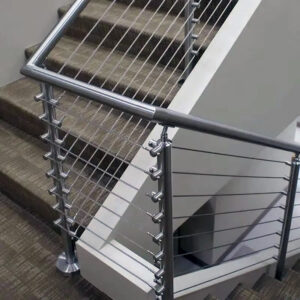
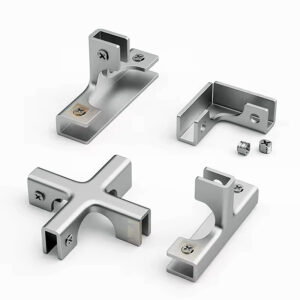
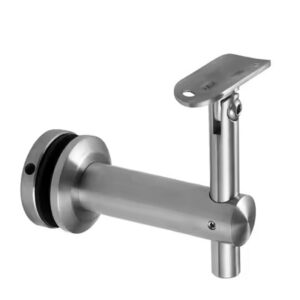
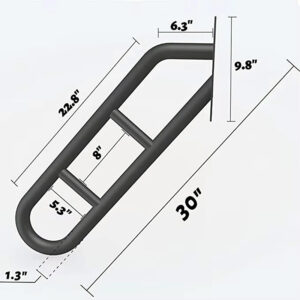
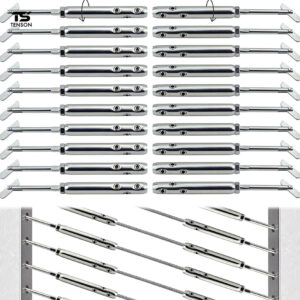
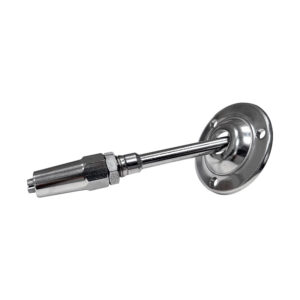
Sending an incomplete RFQ to a cable railing supplier doesn’t just slow the quotation—it can corrupt the hardware schedule entirely, producing a bill of materials that misses termination types, underestimates cable rows, or omits the tooling needed to make a clean cut on site. When that gap surfaces during installation, the correction path usually involves reordering fittings, waiting on lead times, and absorbing the labor cost of a crew standing idle. The decision that prevents this is not a single specification choice but a structured sequence: resolve project geometry first, then build the terminal and tensioner schedule, then confirm tooling and spares before the order is placed. Buyers who work through that sequence leave the RFQ process with a quotation they can actually issue—and a supplier who can actually fulfill it.
Project Geometry the Supplier Needs for Pricing
Suppliers cannot build a reliable hardware schedule from a run length alone. The variables that determine how many fittings, what grade of cable, and which post hardware are needed are geometric and environmental—and they interact in ways that change the cost calculation meaningfully before a single fitting is counted.
Project type drives structural load expectations. A deck railing carries different lateral forces than a stair run, and a balcony over water imposes a different corrosion environment than an inland wood-frame application. These are not interchangeable inputs. A supplier pricing a 316-grade coastal installation against an inland 304 deck run will produce two different quotations from the same linear footage, and neither quotation is wrong—they are answers to different questions.
Post spacing and guard height are the two geometry inputs that most directly determine hardware quantity. At maximum 4-foot post spacing—reduced to 3 feet for longer span conditions—the post count per run is fixed, and from that count the fitting schedule follows. Guard height combined with cable spacing sets the row count. At a 42-inch guard height with 3-inch vertical spacing between cables, the resulting row count typically falls in the 12–14 range. That figure is an illustrative planning estimate, not a fixed code output, but it is precise enough to make the difference between an accurate quote and a short shipment.
Each of these inputs resolves a different cost variable, and a supplier working without them will either pad the estimate to absorb risk or return a request for information that delays the quotation.
| Parámetro | Information to Provide | Why It Matters for Pricing |
|---|---|---|
| Project type and environment | Deck, stairs, or balcony; inland, coastal, pool, or industrial | Determines load requirements and material corrosion resistance |
| Cable grade | 304 stainless (interior) or 316 stainless (exterior/harsh) | Directly affects material cost and long-term durability |
| Total cable length and number of runs | Total linear feet and how many parallel cable rows | Required for hardware and cable quantity take-offs |
| Post type and maximum post spacing | Wood or metal posts; max 4 ft spacing (3 ft for long spans) | Influences post hardware selection and structural load distribution |
| Altura de la barrera | Overall railing height (e.g., 42 inches) | Combined with cable spacing determines number of cable rows |
| Distancia entre cables | Desired vertical spacing between cables (e.g., 3 inches) | Sets the final row count (e.g., 12–14 rows for 42-inch guard) |
The table above captures the inputs as a structured checklist; the judgment call before submitting is whether the buyer’s design documents can actually answer every row. If post spacing is still under review or guard height is subject to a permit condition, note those uncertainties explicitly in the RFQ rather than leaving the supplier to assume a default.
Cable Terminal and Tensioner Schedule
Hardware type is where the most consequential specification errors occur, because a fitting incompatible with the specified cable diameter or construction cannot be remediated on site—it must be replaced. This section of the RFQ carries more downstream risk per line item than the geometry section does.
Cable diameter and construction should be specified together, not independently. A 1/8-inch cable is typical for residential applications; 3/16-inch is more common in commercial contexts where load expectations are higher. Construction—7×7 for straight runs, 7×19 where stair configurations or corner routing demand greater flexibility—affects how the cable behaves at the fitting, which in turn affects which end fitting type is appropriate. Wire rope properties for each construction type are addressed under ISO 2408:2017, which provides the product-standard reference for strand count, lay, and breaking force—useful context when a supplier’s product data sheet needs to be verified against an independent reference.
The swage-versus-threaded decision is where field adjustability enters the picture. Swage fittings are factory-attached, deliver a clean finished appearance, and cannot be repositioned once set. Threaded adjustable fittings allow on-site tension correction as the cable seats over time, which matters when the structure involves long runs or when installation sequencing makes pre-tensioning to final load impractical. The two fitting types are not interchangeable once the cable is cut to length, so this choice must be made and communicated in the RFQ, not resolved in the field.
Tension is the performance output that the terminal and tensioner selection must achieve. A working range of 250–400 lbs is a practitioner-sourced threshold for controlling cable deflection under lateral load—not a universally mandated figure, but a meaningful planning criterion. If the tensioner specified in the RFQ cannot reach the lower bound of that range across the longest cable run in the project, the hardware schedule needs revision before the order is placed.
| Especificación | Available Options | Nota |
|---|---|---|
| Diámetro del cable | 1/8 inch (residential) / 3/16 inch (commercial) | Size commonly tied to project type and load expectations |
| Estructura del cable | 7×7 standard / 7×19 flexible | 7×7 suits straight runs; 7×19 provides greater flexibility for corners and stairs |
| Calidad del material | 304 (interior) / 316 (exterior) | Grade selection based on environmental exposure |
| Tipo de conexión final | Swage permanent / Threaded adjustable | Swage fittings are factory-attached; threaded allow on-site adjustability |
| Tensioning method | Turnbuckle / Threaded tensioner | Method dictates how final tension is applied and maintained |
| Tension requirement | 250–400 lbs | Adequate tension prevents excessive cable deflection under load |
Reviewing the specification table against the project’s longest run and most demanding termination detail—usually a stair run at a corner post—is the practical test of whether the hardware schedule is complete.
Tooling and Spare-Part Boundaries
Tooling is the part of the RFQ that buyers most commonly omit, and it is the omission most likely to stop installation on day one. Cable rated for a 3/16-inch diameter requires a cutter sized and calibrated for that diameter; using an undersized cutter crushes the strand ends, making it impossible to seat a swage fitting cleanly or thread a terminal without damage. Damaged ends are not repairable in the field—the cable must be recut, which shortens the run and may require a replacement length if the original cut was already tight.
The tooling boundary to define in the RFQ is which tools are expected to be included or available with the hardware supply, and which the installer is sourcing independently. If the supplier offers compatible cutters, swaging tools, or tensioning wrenches, these should appear as line items in the quotation—not as assumptions. A quotation that prices only cable and fittings while leaving tooling to the buyer’s discretion creates a gap in the order that surfaces at the worst possible moment.
Spare-part quantities follow a similar logic. For a typical project, a conservative approach is to carry spares for the most failure-prone connection points: end fittings at corner posts, tensioners on the longest runs, and at least one additional spool or cable assembly length for each distinct diameter and grade in the project. The appropriate spare quantity is a project judgment, not a fixed rule, but the RFQ should define the boundary explicitly. A supplier who receives a clear spare-part request can include it in the quotation and confirm lead time. A supplier who receives no spare-part guidance will ship exactly what was ordered—and nothing more.
Kit Purchasing Versus Component Procurement
The decision between purchasing hardware as bundled kits versus individual components is a procurement trade-off with real consequences for how errors are caught and corrected. Neither approach is inherently better; the right choice depends on how unusual the project’s termination details are and how much procurement oversight the buyer’s organization can sustain.
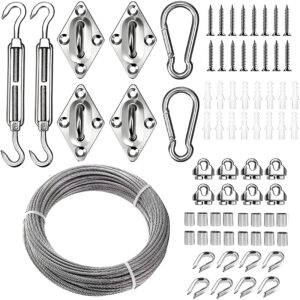
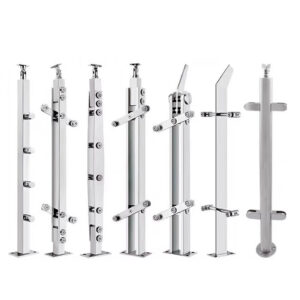
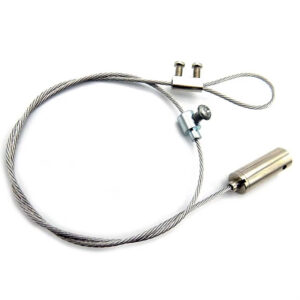
Bundled kits—pre-assembled collections of cable, fittings, and tensioners sized for a defined run type—reduce the risk of ordering mismatched components. A kit designed for a straight residential run on wood posts will include compatible parts by definition, which simplifies order control and reduces the chance of a fitting-to-cable mismatch. For projects with a high proportion of standard straight runs and consistent post spacing, kits are an efficient procurement path. Kits de herrajes para montaje de cables are a practical starting point for buyers working through standard run configurations, where the kit scope maps cleanly to the project’s geometry.
Component-level buying offers more flexibility for projects with unusual termination details—angled posts, mixed cable diameters on the same structure, or a combination of swage and threaded ends across different runs. But that flexibility comes with a procurement burden: every component must be specified correctly, and the buyer absorbs the responsibility of confirming compatibility across the full bill of materials. A missing end fitting or an incompatible tensioner body won’t be caught by a kit’s built-in pairing logic—it will be caught on site when assembly fails.
The practical dividing line is the proportion of non-standard details in the project. If more than roughly a third of the terminations involve stair runs, corner posts, or mixed fitting types, component-level purchasing gives the control needed to match hardware to each condition. If the project is predominantly standard straight runs, kit purchasing reduces ordering complexity without meaningfully limiting capability.
Purchase-Order Completeness Check
A quotation that has been negotiated and approved is not the same as a purchase order that can be issued without risk. The gap between the two is the completeness check—a final review that confirms the order as written matches the project as specified, before the material ships.
Material grade is the most consequential checkpoint. Ordering 304 stainless against a quotation that specified 316 is an error that produces hardware that looks correct in the box and fails in service. The corrosion performance gap between the two grades is significant in coastal, pool, or industrial environments, and the failure is typically not visible until surface pitting or fitting discoloration emerges months after installation. Reversing that error after the fact means replacing hardware that has already been installed—a cost that bears no relationship to the price difference between grades at time of order. Treating material grade verification as a formal PO checkpoint, aligned with the kind of supplier process quality that ISO 9001:2015 addresses, is a low-effort control against a high-consequence mistake.
Compliance and delivery confirmations close the remaining gaps. Local building code or performance requirements for the destination market should be identified in the PO, not assumed from the quotation. Delivery address and required timeline should be confirmed explicitly, because misrouted or delayed shipments affect not just the hardware order but the installation schedule that depends on it.
| PO Checkpoint | Qué confirmar | Risk if Incomplete |
|---|---|---|
| Material grade confirmation | Verify 304 vs 316 stainless as specified in the quotation | Wrong grade can lead to premature corrosion or code failure |
| Target market compliance needs | Identify local building code or performance requirements for the destination | Non-compliant hardware may fail inspection and require replacement |
| Delivery country and timeline | Confirm shipping address and required delivery date | Delays or misrouted shipments can stall project schedules |
The PO completeness check is most useful when it is treated as a sign-off step with a named reviewer, not as a mental scan before clicking submit. For projects involving multiple run types, mixed grades, or phased delivery, the review should be done line by line against the approved quotation.
An RFQ that separates straight runs from stair runs and corner terminations, resolves cable grade and fitting type before submission, and includes tooling and spare-part scope in the same document gives a supplier everything needed to return a quotation that can actually be issued as a purchase order. The completeness check at the PO stage is not a redundant step—it is the point where a grade substitution or a missing tool line item can still be corrected without a job-site consequence.
Before issuing the order, the specific question worth confirming is whether every run type in the project has a corresponding hardware line in the quotation, and whether the tensioner specified for the longest run is capable of reaching working tension across that span. If both answers are clear, the order is ready. For a broader reference on specification decisions across cable railing system types, The Complete Stainless Steel Cable Railing Guide for Commercial & Residential Projects covers material selection, code context, and installation considerations in more depth.
Preguntas frecuentes
Q: I’m retrofitting an existing deck with posts already in place. How do I adapt the RFQ checklist when I can’t change post spacing or guard height?
A: Send the fixed dimensions and note any deviations from ideal post spacing so the supplier can apply the correct end-treatment adjustments. Even if geometry can’t be redesigned, specifying actual post positions, guard height, and cable-run lengths with existing termination points prevents the supplier from assuming standard conditions that don’t match your site.
Q: I’ve submitted the RFQ. What should I do immediately to keep the quoting process moving?
A: Confirm the supplier has enough design clarity to proceed, and flag any geometry or specification items still under review. A quick acknowledgment that identifies the outstanding decisions—such as an unconfirmed guard height subject to permit approval—lets the supplier hold a place without returning a padded estimate or a full request for information.
Q: If more than half of my cable runs involve stair transitions or corner posts, does the advice about bundled kits still apply?
A: No—once non-standard terminations dominate, component-level purchasing becomes the safer route. Kits are efficient when most runs are straight and repetitive, but a high share of stair or corner details requires the per-piece control that component procurement provides, because kit shortcuts will almost certainly generate mismatch on those complex terminations.
Q: Turnbuckle tensioners and threaded stud tensioners both appear in the checklist—how do I decide between them for long, straight runs?
A: Long, straight runs benefit from the greater take-up range and visual tension confirmation that turnbuckles offer, while threaded stud tensioners suit tight post faces or where a lower-profile look is required. The right choice depends on available working space behind the end post and how much field adjustment you expect after initial tensioning—discuss both factors with the supplier at the specification stage.
Q: Is this full RFQ checklist worth the effort for a small residential balcony with only three cable runs?
A: Yes, but you can scale it. For a small project with standard straight runs, the checklist still prevents grade mix-ups and missing cutters, but you can streamline procurement by using a pre-configured cable assembly hardware kit that matches your run type, then add a compatible cutter and spares as line items. The effort-to-risk ratio is even higher on small jobs because there’s little margin to absorb a reorder.