Decorative laser cut panels are one of the more expensive ways to add visual identity to a balcony railing system — and one of the more common ways to absorb avoidable rework cost. The problem is rarely the cutting itself. It is the sequence of decisions that happens before and after: artwork approved without structural review, finishing complexity underestimated at procurement, and replacement logistics ignored until a panel needs to come out. Each of those gaps shows up as a real cost — remediation labor, delayed handover, or visible finish degradation at precisely the details that justified the premium. The decision to specify custom cut panels should rest on a clear analysis of thickness, open area, post-cut finishing requirements, and whether the visual or functional gain is actually irreplaceable by a simpler infill type. Working through those conditions in order is what separates a justified specification from an expensive surprise.
Panel thickness and open area checks before pattern approval
Pattern approval is where custom laser cut balcony railing projects fail earliest and most expensively. Artwork that renders cleanly in a CAD file does not automatically satisfy code geometry requirements, and discovering that mismatch after fabrication means paying for full rework rather than a drawing revision.
The 4-inch sphere rule is not a design suggestion. Under IBC and comparable building codes, no opening in the infill panel may allow passage of a 4-inch sphere. For decorative patterns with large organic cutouts — foliage motifs, architectural grilles, abstract geometry — this rule can invalidate significant portions of the design without any obvious warning in the rendered artwork. It must be checked against the actual cut geometry before the file is approved for production, not treated as a post-approval compliance formality.
Structural load capacity introduces a second layer of review that is equally non-negotiable. Cutting material out of a flat panel reduces stiffness and load-bearing capacity in ways that vary substantially with pattern geometry. A pattern with evenly distributed small perforations may retain close to full panel rigidity. A pattern with large continuous cutouts running near panel edges or fastening zones may not meet IBC or Eurocode lateral load requirements after cutting, even if the base sheet thickness appears adequate. That analysis needs to happen as part of pattern approval, not after the stamped engineering letter is requested.
| Ponto de controle | O que verificar | Reason to Verify |
|---|---|---|
| Régua esférica de 4 polegadas | No opening in the cut pattern allows passage of a 4-inch sphere | Prevents code non‑compliance and costly redesign |
| Structural load capacity | Pattern design meets IBC/Eurocode load requirements after cutting | Ensures panel safety and code conformance |
| Supplier engineering letters | Stamped letters confirming the design satisfies regional thickness and open‑area codes | Provides documented evidence of compliance |
Skipping any one of these three checkpoints creates a different downstream problem. Missing the sphere-rule check leads to code non-compliance that may require field modification or panel replacement after inspection. Missing structural certification means the load analysis gap becomes visible only at installation review or, worse, post-occupancy. Missing the engineering letter leaves the contractor without documented proof of compliance — a gap that matters most during third-party inspections and handover sign-off.
Finishing work hidden behind decorative cutouts
Finishing complexity after laser cutting is the cost that procurement teams most consistently underestimate, and it is also the cost most directly tied to long-term appearance. Buyers who specify a decorative cut panel often focus on the pattern and the base material grade. They rarely budget adequately for the post-cut work that determines whether that pattern still looks intentional after two years of exposure.
Laser cutting leaves burrs at cutout edges. Inside a complex decorative pattern, those burrs are geometrically difficult to access and require controlled mechanical or electrochemical processing to remove consistently. If edge refinement is incomplete, the result is micro-scale stress concentration points at exactly the locations most exposed to moisture and surface contamination — the interior edges of the cutouts. This is where corrosion initiation is most likely and least visible during initial inspection.
For powder-coated panels, the coating must reach all interior cutout surfaces with sufficient film build. Industry benchmarks for architectural powder coatings — AAMA 2604 and 2605, which govern exterior coating performance — are often referenced as a basis for specification, and a dry film thickness of at least 60 µm is a reasonable design figure for durability in typical exterior conditions. Thinner coverage at interior cutout edges, which is a genuine risk in complex geometry, reduces the effective protection at the locations that are hardest to inspect and hardest to refinish in the field. Corrosion resistance at cutout edges is typically validated through salt spray testing; 1,000 hours is a commonly referenced testing duration for evaluating coating integrity in corrosive environments, though the relevant threshold for a specific project should reflect the actual exposure classification.
Installation tolerance is a downstream consequence of edge refinement quality. A panel fabricated to ±0.1 mm modular fit requires consistent edge geometry across all cutouts and panel perimeters. Poor burr control or inconsistent post-processing introduces dimensional variation that accumulates across multiple panels in a long balcony run, producing visible misalignment at the joints between panels — the most visually prominent feature of the installation. That is a finishing quality problem with an installation-stage consequence, and it originates in decisions made during post-cut processing, not at the installation site.
Laser cut privacy compared with simpler infill options
The decision between laser cut panels and simpler infill types — bar picket, rod infill, or stainless steel mesh — is rarely framed honestly at the specification stage. Laser cut panels carry real advantages for specific project conditions, but they also carry costs that simpler systems simply do not have.
The primary structural advantage of laser cut panels for privacy-sensitive applications is the ability to control perforation density across the panel surface. A gradient pattern can transition from near-opaque at seating height to more open at eye level, creating privacy calibration that no bar or picket spacing can replicate. For hospitality rooftop terraces, high-density residential buildings with close sightlines, or commercial balconies facing public circulation, that level of control has genuine functional value that justifies additional fabrication cost.
Branding integration is the second condition where laser cut panels outperform alternatives. Custom infill systems that carry a property logo, a recurring motif, or an architectural pattern tied to the building’s identity cannot be replicated through bar spacing or mesh selection. For projects where visual identity is part of the brief — hotel brands, flagship commercial addresses, landmark residential towers — the ability to embed that identity into the railing infill is a capability unique to laser cutting.
| Infill Option | Privacy Control | Branding Potential | Open‑Area Complexity |
|---|---|---|---|
| Laser‑cut panels | Precise, adjustable via perforation density | Can integrate logos or architectural identity | Higher complexity due to custom cutouts |
| Simple bar/picket infill | Fixed, no adjustable opacity | Nenhum | Low complexity, minimal open‑area issues |
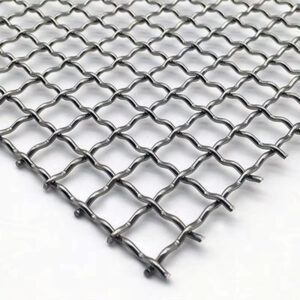
| Stainless steel mesh | Balances visibility with strength | Limited, no custom branding | Moderate; contemporary look with fewer pattern concerns |
When neither privacy precision nor branding is part of the project brief, the calculus shifts sharply toward simpler infill. Stainless steel mesh offers marine-grade corrosion resistance, a contemporary visual profile, and substantially lower post-processing complexity than laser cut panels. Bar and picket infill requires minimal finishing labor, carries no open-area pattern complexity, and is far easier to replace as a single member rather than as a full panel. The procurement and maintenance advantages of simpler systems are real, and choosing laser cut panels for visual preference alone — without a clear functional or identity rationale — means absorbing fabrication cost, finishing labor, and replacement complexity that the simpler alternative would have avoided entirely.
Artwork decisions that weaken panels or fastening
The friction point in most custom panel projects is pattern approval — and the failure mode is almost always the same: artwork that passes visual review reaches fabrication with a structural problem that a drawing revision would have resolved at zero cost.
CAD review before fabrication is the most efficient point to catch two specific problems: cutout geometry that reduces panel stiffness below what load calculations assumed, and decorative elements that eliminate or compromise the fastening zones needed to secure the panel to the top rail, bottom channel, or intermediate support. Both problems are invisible in a rendered image. They require review against the structural model — checking where the panel connects to the framing system and whether the material remaining at those connection points is sufficient to carry the loads and fastening hardware the installation depends on.
Para sistemas de preenchimento de painéis personalizados, this is not a formality. Decorative patterns that concentrate cutouts near panel corners or edges can leave insufficient metal for fastener engagement. Patterns with large continuous voids running parallel to the panel’s long axis can reduce in-plane bending resistance, producing flex under lateral load that would not occur in a solid or minimally perforated panel of the same thickness. Neither of those problems is apparent on screen; both are apparent in a structural model.
Stamped engineering letters serve a specific and limited function here: they confirm that the as-designed pattern meets structural requirements for the specific load case and regional code applicable to the project. They are a defensibility check — evidence that the pattern was reviewed against structural criteria, not just aesthetic intent. Requesting a stamped letter without providing the actual cut pattern geometry for review produces a document that does not, in practice, confirm anything specific about the design. The letter and the pattern review must address the same geometry to carry any real value.
Architectural value required to justify custom cutting
Custom laser cut panels are a justified specification in a narrow range of project conditions. The justification is not visual differentiation alone — it is a cost-benefit threshold that accounts for fabrication complexity, finishing labor, structural validation, and long-term maintenance burden.
The conditions that move the threshold in favor of custom cutting are relatively specific. Projects with a mandatory branding or identity requirement — where the railing is expected to carry a logo, a pattern language tied to the building, or a motif integral to the architectural brief — have a clear value rationale that simpler infill cannot satisfy. Projects using BIM-coordinated delivery workflows benefit from the fabrication precision that laser cut panels support: tight dimensional tolerances reduce clash risk and installation conflict in complex balcony geometries. Mixed-material assemblies that combine stainless steel infill with glass panels, timber handrails, or composite decking may require a custom cut panel to bridge the visual language between materials in a way that standard bar or mesh infill would interrupt.
| Fator de valor | Architectural Value Added | When Most Relevant |
|---|---|---|
| Project‑specific motifs/logos | Strengthens identity and perceived property value | Projects where branding or signature design is a priority |
| BIM content integration | Enables precise planning and early clash detection | Commercial projects requiring tight coordination |
| Mixed‑material applications | Elevates design beyond standard railing systems (e.g., steel with glass or wood) | High‑design residential or landmark commercial work |
| Warranty coverage (2–5 years) | Offsets fabrication cost with long‑term structural and finish protection | Any project evaluating total lifecycle cost |
Warranty coverage is a useful lens for assessing whether the fabrication cost is defensible over time. A panel system carrying two to five years of structural and finish warranty coverage shifts some of the lifecycle risk back to the fabricator, which changes the total cost comparison against a simpler infill system with lower upfront cost but no formal warranty. That comparison is most relevant in commercial applications where lifecycle cost analysis is part of the procurement review.
The practical implication is that custom cutting is difficult to justify on aesthetic preference alone when the project lacks a privacy precision requirement, a branding mandate, or an architectural identity brief that standard infill cannot serve. A stainless steel balcony railing specified with bar or mesh infill will meet code, perform reliably, and carry lower finishing and replacement cost in most residential and mid-range commercial applications. The threshold for moving to custom cut panels should be a documented reason — functional, identity-based, or coordinative — that the simpler option genuinely cannot satisfy.
The hidden cost structure of laser cut balcony railing panels runs in a consistent order: structural validation and open-area compliance must be resolved before pattern approval, finishing complexity must be budgeted before procurement, and the decision to cut at all should rest on a use case that bar or mesh infill cannot address. Projects that compress or skip those steps do not save time — they convert design-stage decisions into fabrication-stage rework.
Before commissioning custom cut panels, confirm that the approved pattern has been reviewed against the 4-inch sphere rule and a load certification framework relevant to the project’s code jurisdiction, that post-cut edge treatment and coating requirements are explicitly scoped in the fabrication contract, and that the visual or functional gain the pattern provides cannot be achieved at lower complexity through a mesh or standard infill system. If all three conditions are satisfied, the custom panel is a defensible specification. If any one is unresolved, it is a procurement risk that will surface later in the project at higher cost.
Perguntas frequentes
Q: What happens if the laser cut pattern passes visual review but the project is in a jurisdiction with stricter lateral load requirements than IBC?
A: The pattern approval process must be repeated against the applicable regional code, not defaulted to IBC compliance. Structural load capacity after cutting varies with pattern geometry, and a panel that meets IBC lateral load requirements may fall short under Eurocode or local equivalents with different load factors or infill classification rules. This means the stamped engineering letter must reference the actual code jurisdiction — a letter issued against a different standard provides no defensible compliance evidence for the authority having jurisdiction over the project.
Q: After the panel design clears structural review and fabrication is complete, what should be confirmed before panels are delivered to site?
A: Verify that post-cut edge treatment, coating film thickness, and dimensional tolerance have been independently documented before shipment leaves the fabricator. Burr removal, powder coat coverage at interior cutout edges, and modular fit accuracy are all conditions that are difficult or impossible to remediate once panels are on site. Requesting QC records — including salt spray test certification and dimensional inspection reports — as a delivery prerequisite puts the compliance burden at the point where correction is still practical and cost-contained.
Q: Is there a project scale below which laser cut panels become genuinely impractical regardless of the visual rationale?
A: Yes — small-run orders amplify the per-panel cost of structural validation, pattern approval, and post-cut finishing without distributing those fixed costs across enough units to keep the premium proportionate. For single-balcony residential applications or short panel runs where fewer than roughly six to eight panels are needed, the fabrication setup, engineering review, and finishing labor costs frequently exceed the value of the visual outcome. The cost-benefit threshold shifts toward custom cutting most clearly on commercial or multi-unit residential projects where the same validated pattern repeats across a sufficient number of panels.
Q: How does stainless steel mesh compare to laser cut panels specifically for coastal or marine-grade exposure conditions?
A: Stainless steel mesh is generally the lower-risk specification for marine-grade exposure. Laser cut panels introduce interior cutout edges that are geometrically difficult to coat and inspect consistently — the locations where corrosion initiation is most likely in chloride-heavy environments. Mesh avoids that post-processing complexity while still delivering marine-grade corrosion resistance, particularly in 316-grade material. Unless the project has a branding mandate or privacy precision requirement that mesh cannot satisfy, the finishing and maintenance burden of laser cut panels in coastal conditions is harder to justify compared with a mesh system that carries fewer vulnerable edge geometries.
Q: If a custom panel system comes with a two-to-five-year structural and finish warranty, does that meaningfully offset the higher upfront cost compared with bar or picket infill?
A: Only if the warranty covers the specific failure modes that laser cut panels are most prone to — finish degradation at cutout edges and structural performance of the as-cut pattern — rather than generic material defects. A warranty that covers the base sheet but excludes post-cut finish failure at interior edges provides limited protection for the conditions most likely to arise. Before treating warranty coverage as a cost-offset, confirm that the warranty language explicitly addresses corrosion resistance at cutout edges and that the fabricator can demonstrate prior compliance claims have been honored, not just that the warranty document exists.