For project managers and architects specifying commercial cable railing, the central challenge isn’t finding a price but accurately modeling the total installed cost for a project exceeding 100 linear feet. The common misconception is treating it as a simple commodity purchase, where cost is driven by linear footage alone. In reality, the budget is a composite of interdependent technical decisions—material specifications, hardware systems, and structural engineering—each with significant cost and labor implications. A misstep in any one area can lead to budget overruns, compliance failures, or premature system degradation.
Accurate costing is critical now due to heightened focus on lifecycle value and total cost of ownership in commercial construction. Building owners and developers are evaluating projects not just on initial capital expenditure but on long-term operational expense, maintenance liability, and sustainability metrics. A cable railing system is a permanent architectural feature; its specification requires balancing upfront investment with decades of performance, making a nuanced understanding of cost drivers essential for responsible project planning and value engineering.
Key Cost Drivers: Materials and Specifications
Defining the Commercial Baseline
The project classification begins with cable diameter. For commercial applications, 3/16-inch Type 316 marine-grade stainless steel cable is non-negotiable. This specification provides the mandated breaking strength exceeding 4,000 pounds and the corrosion resistance required for exterior or high-use environments. This choice immediately establishes a higher material cost baseline than residential 1/8-inch systems and dictates the performance tier of all accompanying components. Architects often lock this specification early, acting as gatekeepers for the supply chain.
The Interconnected Cost Triad
Total cost is governed by three interconnected elements: cable, hardware, and framing. The cable specification dictates the required hardware for termination and tensioning. That hardware system, in turn, creates a direct labor-material trade-off that impacts installation costs. Finally, the structural framing must be explicitly engineered to handle the sustained tension loads from the cables—typically 225 pounds per strand. These three elements cannot be costed in isolation; a change in one reverberates through the others.
The Impact of Engineered Framing
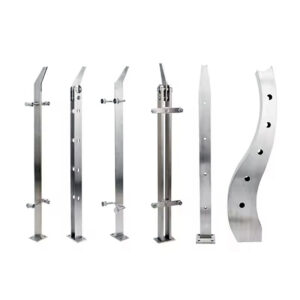
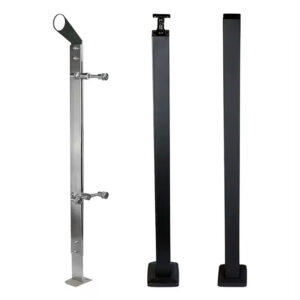
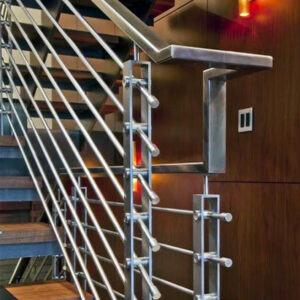
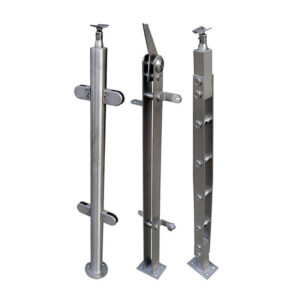
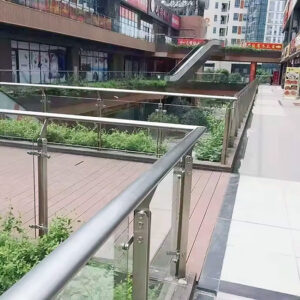
A common oversight is underestimating the structural demands of a tensioned cable system. Standard railing posts are insufficient. The framework, particularly end posts, must be designed to resist bowing and deflection under constant load. This often necessitates double-post designs or the use of thick-wall tubing. The material choice for the frame itself—stainless versus coated carbon steel—represents another major cost decision, balancing initial investment against long-term maintenance. We’ve seen projects where generic posts failed under tension, leading to costly post-installation reinforcements.
| Component | Commercial Standard | Key Impact |
|---|---|---|
| Cable Diameter | 3/16-inch | Mandatory for commercial projects |
| Cable Material | Type 316 stainless steel | High corrosion resistance |
| Breaking Strength | >4,000 lbs | Defines project classification |
| Framing | Engineered for tension | Sustains 225 lbs/strand load |
Source: Technical documentation and industry specifications.
Swaged vs. Swageless Systems: Cost and Labor Trade-Offs
The Swaged System Model
Swaged systems use fittings that are permanently crimped onto the cable ends with a hydraulic press. This method typically requires precise cable measurements to be taken on-site, followed by off-site fabrication. The hardware components themselves are generally less expensive. However, this model introduces hidden costs: specialized shop equipment, potential fees for fabrication services, and a critical dependency on perfect field measurements. An error of a few inches in measurement can render an entire cable run useless, incurring rework costs and schedule delays.
The Swageless System Advantage
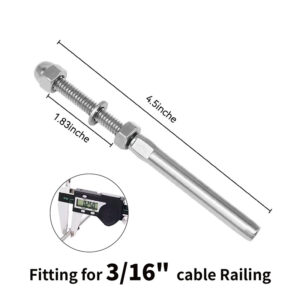
Swageless systems utilize mechanical, one-way locking fittings that are assembled on-site without crimping tools. The significant per-unit cost premium for these fittings is the most visible difference. Their value, however, lies in operational flexibility. They allow for adjustment during installation, forgiving minor measurement errors and simplifying the tensioning process. For large-scale projects, this flexibility can dramatically reduce on-site labor hours and complexity, offsetting the higher hardware cost.
Modeling the Total Installed Cost
The decision between swaged and swageless is economic, not technical. It requires modeling the total installed cost. For a 100+ foot project with straightforward site conditions and an experienced crew, the lower hardware cost of a swaged system might yield savings. For complex installations with difficult access or a less specialized crew, the labor savings from a swageless system’s simplicity often justify its premium. Industry experts recommend creating a side-by-side model that includes hardware, estimated labor hours, and any risk premiums for potential rework.
| System Type | Hardware Cost | Labor & Installation Impact |
|---|---|---|
| Swaged | Lower per-unit cost | High precision measurement required |
| Swaged | Requires hydraulic press | Off-site fabrication dependency |
| Swageless | Higher per-unit premium | On-site adjustment flexibility |
| Swageless | No crimping tools needed | Reduced on-site labor hours |
Source: Technical documentation and industry specifications.
Structural Framing Options: Stainless vs. Carbon Steel
Material Selection and Upfront Cost
The framing material sets the project’s aesthetic and durability trajectory. Stainless steel, particularly grades conforming to standards like ASTM A554, offers superior corrosion resistance and a modern, monolithic appearance. Its upfront material cost is significantly higher. Carbon steel provides greater tensile strength and a lower base cost, making it an attractive option for managing initial budgets. However, its long-term performance is entirely dependent on the quality of its protective finish.
The Critical Role of Coating Specifications
For carbon steel frames, the coating is not an afterthought—it is the primary defense system. A high-performance powder coat, such as one meeting AAMA 2605 specifications, is essential for gloss retention, color stability, and resistance to chalking and fading. This specification directly dictates the maintenance interval and the need for future refinishing. A lower-grade coating will fail prematurely, leading to rust, aesthetic degradation, and costly restoration work long before the end of the system’s structural life.
Engineering for Load and Longevity
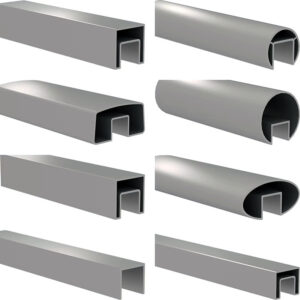
Regardless of material, the framing must be engineered. End posts are the most critical element, as they anchor all cable tension. A single, lightweight post will bow. Solutions include double-post designs, internal reinforcing, or specifying tubing with a thicker wall schedule. The tubing quality itself matters; for stainless frames, specifying welded mechanical tubing that meets ASTM A554 Standard Specification for Welded Stainless Steel Mechanical Tubing ensures consistent material properties and dimensional stability, which are foundational for both strength and a quality weld appearance.
| Framing Material | Upfront Cost | Long-Term Maintenance |
|---|---|---|
| Stainless Steel | Higher material cost | Minimal; occasional cleaning |
| Carbon Steel | Lower base cost | Requires high-performance coating |
| End Post Design | Engineered (e.g., double-post) | Prevents bowing under tension |
Source: ASTM A554 Standard Specification for Welded Stainless Steel Mechanical Tubing. This standard governs the quality and dimensions of welded stainless steel tubing commonly used for railing frames and posts, directly impacting structural integrity and material selection for commercial projects.
How Engineering and Compliance Impact Your Budget
The Fixed Cost of Stamped Engineering
Commercial projects require stamped engineering drawings for permitting. This is a non-negotiable, fixed cost that scales with project complexity, not linear footage. The engineer must calculate loads, verify post spacing and anchorage, and confirm that the entire assembly meets the required safety factors. This upfront investment validates the system’s safety and prevents catastrophic—and liability-heavy—failures. It also streamlines the permitting process, avoiding costly delays.
Holistic Compliance as a System Function
Code compliance is not a single component feature but an outcome of the entire system design. It involves multiple interdependent specifications: cable spacing must prevent a 4-inch sphere from passing (typically 3-inch spacing), intermediate supports are required at ≤48-inch intervals to limit cable deflection, and all materials must meet specified strength ratings. Technologies like internal, hidden tensioners are engineered specifically to meet these codes while maintaining clean sightlines. Overlooking any one requirement can lead to inspection failures.
The Architect’s Role and Manufacturer Support
Architects specify these holistic systems, making them de facto supply chain gatekeepers. Their early specifications lock in material grades, finishes, and performance criteria. Therefore, manufacturers must provide robust technical support to be specified. This includes providing BIM libraries, detailed technical submittals, and engineering validation letters. This support infrastructure is a cost factored into premium systems but is essential for ensuring the specified solution is both compliant and installable.
Installation Labor Costs for Large-Scale Projects
Site Complexity as a Cost Multiplier
Labor constitutes a substantial, variable portion of the budget. Complexity escalates on large projects. Difficult site access—such as high-rise balconies, rooftop terraces, or atrium edges—demands special equipment like swing stages, additional safety protocols, and potentially slower work rates. These conditions increase labor hours and require crews with specific experience, directly impacting the bid. Project managers must conduct a thorough site assessment to identify these constraints early.
The Skilled Task of Cable Tensioning
Achieving uniform tension across dozens of long cable runs is a skilled task with little margin for error. Overtensioning can warp frames and overstress fittings; undertensioning leads to excessive deflection, creating a non-compliant and unprofessional appearance. This process is time-consuming and requires calibrated tension gauges and experienced installers. The labor trade-off from the hardware choice becomes acute here; swageless systems can significantly streamline and speed up the tensioning process compared to swaged systems.
Efficiency Technologies and Contractor Strategy
The economic pressure to reduce on-site hours is driving adoption of efficiency technologies. Pre-fabricated panelized systems, where entire railing sections are assembled in a controlled shop environment, minimize field labor. Automated tensioning tools ensure consistency and speed. For contractors, investing in these technologies or partnering with suppliers who offer them as part of their integrated cable railing system solutions can be a key differentiator, allowing for more competitive and predictable bids on large-scale projects.
| Labor Factor | Cost/Schedule Impact | Mitigation Strategy |
|---|---|---|
| Site Access (e.g., high-rise) | Increases labor complexity | Special equipment & protocols |
| Cable Tensioning | Skilled task; risk of warping | Uniform tension across runs |
| Hardware Choice (Swageless) | Higher hardware cost | Offsets with labor savings |
| Efficiency Tech (e.g., pre-fab) | Higher initial investment | Reduces on-site hours |
Source: Technical documentation and industry specifications.
Calculating Total Cost: A Framework for 100+ Feet
Building a Composite Cost Model
Accurate costing requires moving beyond a per-foot quote to a composite framework. Start with material take-offs: calculate cable, all termination and tensioning hardware, and framing components per linear foot. Add the framing cost based on your material selection (stainless vs. coated carbon steel) and design complexity (standard vs. custom posts). This material subtotal forms the foundation.
Incorporating Fixed and Variable Costs
Next, layer in the fixed costs: engineering and design fees for calculations and permitting drawings. Then, estimate the highly variable installation labor. This estimate must account for site conditions, the chosen hardware system’s install time, and crew expertise. Finally, factor in ancillary costs like freight for large material volumes, potential structural modifications to the building substrate, and site-specific safety measures.
Understanding Economies of Scale
For 100+ foot projects, economies of scale typically apply to material purchasing, where bulk orders can reduce the per-unit cost. However, the fixed costs of engineering and the logistical complexities of large-scale installation do not scale down linearly. These remain significant cost drivers. A proper framework clearly separates scalable material costs from fixed and condition-dependent costs, providing a more accurate and defensible project budget.
Long-Term Value: Maintenance and Lifecycle Costs
The Stainless Steel Lifecycle Proposition
Stainless steel systems represent a premium initial investment with a predictable, low-maintenance lifecycle. Their inherent corrosion resistance means they can last decades with only occasional cleaning to remove dirt and salt deposits. There is no coating to degrade, chip, or require refinishing. This translates to near-zero ongoing operational expense and no scheduled maintenance costs, a significant advantage for facility managers focused on reducing long-term operational budgets.
The Coating-Dependent Life of Carbon Steel
For carbon steel systems, the lifecycle cost is almost entirely dictated by the coating specification. A high-performance powder coat meeting AAMA 2605 standards can provide 15-20 years of service before showing significant wear in harsh environments. A lower-grade coating may fail in half that time, necessitating a costly and disruptive full strip-and-recoat process. The total cost of ownership calculation must include the net present value of these future maintenance events.
Sustainability and Total Cost of Ownership
The sustainability argument is shifting from material recyclability to operational resource reduction. A railing system that lasts 50 years with minimal upkeep consumes far fewer resources over its life than one requiring multiple repairs or replacements. This reduction in lifetime waste, energy for refinishing, and labor for maintenance is a crucial data point for Environmental, Social, and Governance (ESG) reporting. It reframes the initial investment as a strategic decision for lower total cost of ownership and reduced environmental impact.
| System Choice | Maintenance Frequency | Lifecycle Consideration |
|---|---|---|
| Stainless Steel | Decades with cleaning | High longevity, low upkeep |
| Carbon Steel (AAMA 2605 coat) | Dictated by coating quality | Prevents rust, refinishing cycles |
| Total Cost of Ownership | Lower operational expense | Crucial for ESG reporting |
Source: Technical documentation and industry specifications.
Choosing the Right System: A Decision Checklist
Technical Validation and Specification
Begin by validating core technical requirements. Confirm the specification mandates 3/16″ Type 316 cable for commercial use. Immediately reject any supplier offering generic, non-engineered posts; demand structural calculations proving the framing can handle sustained cable tension loads. Audit the proposed system holistically for code compliance, ensuring spacing, support intervals, and load ratings are met as an integrated unit, not just by individual components.
Economic and Operational Analysis
Model the total installed cost comparison between swaged and swageless hardware systems for your project’s specific scale and site complexity. For carbon steel frames, require and verify the coating specification (e.g., AAMA 2605) in writing. Assess the supplier’s model: does it offer an integrated, warranty-backed system for consistency, or a component supply model that offers flexibility but places integration risk on your team?
Implementation and Partnership Planning
Finally, plan for installation efficiency. Discuss with your contractor and supplier what technologies—like pre-fabrication or specialized tensioning tools—can reduce on-site labor hours. Choose a partner that provides comprehensive technical support, from BIM objects to engineering collaboration, not just a product catalog. This due diligence ensures the selected system aligns with both your project’s budget and its long-term performance goals.
The final cost for a 100+ linear foot commercial cable railing system is a function of deliberate technical choices, not a discovered commodity price. Prioritize decisions that balance upfront material investment with long-term durability, and always model the total installed cost, where labor efficiency can offset hardware premiums. The structural integrity of the framing, validated by engineering, is non-negotiable for safety and performance.
Need professional guidance specifying a commercial cable railing system that aligns with your project’s budget and lifecycle goals? The technical team at Esang provides engineering support and detailed project modeling for large-scale applications. Contact us to discuss your specific requirements and request a comprehensive project analysis.
Frequently Asked Questions
Q: What are the primary cost drivers for a commercial cable railing system over 100 feet?
A: Your budget is defined by three interconnected material specifications: cable diameter, termination hardware, and structural framing. Commercial projects require 3/16-inch Type 316 stainless steel cable for its strength and corrosion resistance, which dictates the required hardware and engineered framing to handle sustained tension loads. This means your initial material choices directly determine both the project’s compliance pathway and the complexity of installation labor.
Q: How do swaged and swageless cable termination systems compare for large-scale project budgets?
A: The choice is a direct labor-material trade-off. Swaged fittings are less expensive but require precise off-site fabrication, risking costly rework from measurement errors. Swageless hardware has a higher unit cost but enables on-site adjustment, reducing labor hours and complexity. For projects where minimizing on-site time is critical, the total installed cost often justifies investing in a swageless system despite its premium price.
Q: What structural considerations are non-negotiable for commercial cable railing frames?
A: Frames must be engineered to withstand constant cable tension, typically 225 pounds per strand, which precludes the use of generic posts. You must choose between stainless steel for low maintenance or powder-coated carbon steel for higher strength at a lower base cost. This means you should verify structural calculations for your specific loads and, for carbon steel, specify a high-performance coating like AAMA 2605 to ensure lifecycle value.
Q: Why does engineering represent a fixed cost in commercial cable railing projects?
A: Permitting requires stamped engineering drawings that validate the entire system as an integrated, code-compliant assembly. This includes cable spacing, support intervals, material strength, and the performance of specialized components like hidden tensioners. For projects where architectural specifications are locked in early, you must select a supplier that provides comprehensive technical support and validation to avoid costly redesigns later.
Q: How should we calculate the total cost for a 100+ linear foot commercial railing project?
A: Move beyond a simple per-foot quote and build a composite cost model. Sum material costs for cable, hardware, and framed posts. Then add fixed engineering fees, variable installation labor based on site access and hardware type, and ancillary costs like freight. This framework means that while you gain economies of scale on materials, complex site logistics and engineering remain significant, non-negotiable budget drivers.
Q: What long-term value do stainless steel frames provide compared to coated carbon steel?
A: Stainless steel offers decades of service with only occasional cleaning, minimizing operational expense and lifecycle waste. Carbon steel with a high-quality powder coat, such as one meeting AAMA 2605 specifications, provides durability but requires planned refinishing cycles. For facilities focused on ESG reporting and total cost of ownership, the higher initial investment in stainless often translates to lower resource consumption over 50 years.
Q: What material standards are relevant for specifying stainless steel railing tubing?
A: Tubing for posts and frames should conform to established mechanical and structural standards. For welded stainless steel mechanical tubing in square or rectangular shapes, refer to ASTM A554. For general service requirements on seamless and welded austenitic stainless steel tubing, the ISO standard referencing ASTM A269 is applicable. This means your project specifications should cite these standards to ensure material quality and dimensional consistency for structural integrity.