Quotes that bundle glass, hardware, posts, and installation into a single line rate are the most common source of budget failure on glass balcony railing projects. A contractor presenting a lower per-linear-foot number may simply be quoting a narrower scope—omitting freight, edge preparation, or replacement glass allowance—rather than offering a genuinely competitive price. The problem compounds when site conditions emerge after contract execution: an uneven slab edge or restricted hoist access that nobody confirmed in writing becomes a change order against a budget that was already underbuilt. Reading this article will sharpen your ability to separate legitimate price differences from scope differences before you sign anything.
Cost buckets that must be separated before quote review
Comparing quotes without first separating their component cost buckets is the structural mistake that makes most first-round quote reviews meaningless. A headline unit rate that blends glass build-up, post material, handrail, and system type cannot be evaluated for accuracy or competitiveness because each of those components can move independently and by significant amounts.
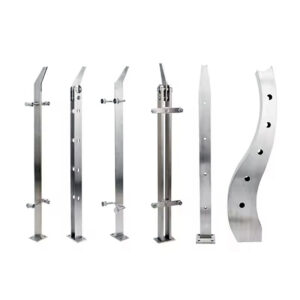
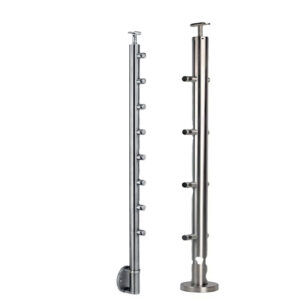
Glass type alone creates a wide fork. The spread between 3/8″ tempered glass and 9/16″ laminated glass is not a minor finish upgrade—it represents a fundamentally different structural and safety specification, and the cost difference is large enough that mixing them across competing quotes produces comparisons that are measuring different products. Post material adds another independent variable: upgrading from aluminum to 304 stainless steel carries a measurable per-linear-foot premium, and moving to 2205 duplex stainless for coastal or high-demand environments pushes that further. Handrail material is a third independent bucket with its own wide range that has no fixed relationship to the post or glass specification.
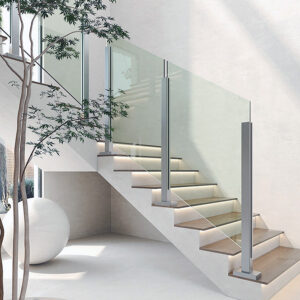
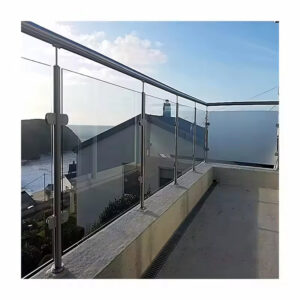
System type defines the cost baseline before any of those material choices are applied. A post-to-post system and a frameless system are not equivalent scopes with different aesthetics—they involve different structural approaches, different glass thicknesses, and different hardware loads. Treating them as interchangeable until the final design decision is resolved makes early budget estimates unreliable.
Each of these buckets must appear as a separate line item in any quote before you attempt to compare unit rates across vendors.
| Cost Bucket | Typical Price Range (per linear ft) | What to Confirm |
|---|---|---|
| Glass build-up | $170–$290 (3/8″ tempered) / $300–$495 (9/16″ laminated) | Glass type, thickness, and lamination specified |
| Post material upgrade | +$40–$70 when switching from aluminum to 304 stainless; higher for 2205 | Alloy grade and whether upgrade is itemized |
| Handrail material | $70–$279 | Handrail line item separate from posts and glass |
| System type | Post-to-post: $170–$565 / Frameless: $210–$680 | Scope clearly defined before comparing unit prices |
The figures in that table reflect typical observed market ranges, not contractor price ceilings or regulatory cost benchmarks. Their practical use is as a reasonableness check: if a quote’s glass line falls outside the range for the specified thickness, or if the post material premium is absent entirely, that signals either a scope gap or a bundling problem worth investigating before award.
Inclusion gaps that distort unit price comparisons
A quote that itemizes fewer lines almost always appears cheaper. That is the distortion mechanism, and it is not accidental. When shipping and taxes are absorbed into material pricing rather than shown separately, the unit rate looks lower without the total cost being lower. When installation labor is rolled into a blended rate rather than quoted as its own line, site-specific cost drivers—access difficulty, after-hours requirements, concrete substrate condition—become invisible until mobilization.
The most common omission that causes downstream budget problems is freight. Published unit cost estimates for glass railing systems routinely exclude shipping. If a vendor quote also excludes it, and you compare that number against a fully loaded competitor quote, you are not comparing prices—you are comparing scopes. The same logic applies to glass panels themselves: if the panel line does not specify thickness and type, you cannot confirm whether the quote is covering the glass your project actually requires.
| Commonly Omitted or Bundled Item | Why It Distorts Comparison | What to Confirm |
|---|---|---|
| Shipping and taxes | Published estimates often exclude them, making unit prices appear lower | Quote must include shipping and applicable taxes as separate lines |
| Glass panels | Glass type drives large cost differences | Panel price listed with thickness and type (tempered vs laminated) |
| Posts and hardware | Hardware choice (aluminum vs stainless) shifts spend | Per-unit cost and material specification |
| Top rail / handrail | Handrail is an independent cost bucket | Separately quoted with material and linear foot price |
| Installation labor | Labor varies with site conditions and should not be buried | Explicit installation line, not rolled into material pricing |
Treat each item in that checklist as a verification point, not a contractual entitlement. Contractors are not universally obligated to break out every line separately, but a quote that cannot answer where each of those items is priced should be treated as incomplete for comparison purposes. The downstream consequence of accepting a bundled quote is discovering the omission as a change order rather than as a negotiable line item. Requiring itemized quotes at the front end is the only reliable way to prevent that outcome.
Fixing methods that shift steel and labor cost
The fixing method decision is where a structural trade-off gets misread as a simple upgrade choice. Post-to-post systems use more steel and hardware per linear foot but allow thinner glass. Frameless systems reduce hardware load but require thicker, heavier glass panels to carry the structural work that posts would otherwise handle. This means choosing between these systems does not eliminate cost—it moves cost between the material bucket and the labor bucket, and the total spend depends on which is more efficient for the specific site layout.
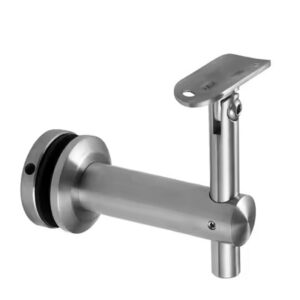
Spigot and standoff systems reduce the channel steel work required in some configurations, but they demand thicker glass to achieve adequate structural performance, and handling heavier panels increases installation labor and rigging complexity. Base shoe systems—anodized aluminum channels with integrated drainage—add metal weight to the installation and may increase both material cost and fit-up labor, but they deliver a cleaner finish line at the base that some project specifications require. The finish outcome and the cost outcome move in partially opposite directions, and that trade-off needs to be resolved at the specification stage, not during installation.
| System Type | Typical Cost Range (per linear ft) | Glass & Structural Notes | Additional Labor Considerations |
|---|---|---|---|
| Post-to-post | $170–$565 | Uses more steel/hardware, thinner glass (e.g., 3/8″ tempered) | Aluminum or SS posts; stair configurations +25% |
| Frameless – Base Shoe | Part of $210–$680 range | Anodized aluminum channel with drainage; requires 1/2″ tempered glass | More metal weight; may increase installation labor |
| Frameless – Standoff Pins | Part of $210–$680 range | 316 stainless for corrosion resistance | Glass thickness typically heavier, handling complexity |
Stair configurations extend this problem regardless of system type. The roughly 25% per-linear-foot premium commonly observed on stair sections reflects custom cutting, angle fit-up, and the additional labor required to achieve a consistent rail line on a slope. That premium rarely appears as a named line item in early estimates—it tends to surface during shop drawing or field measurement, which means a project with significant stair runs can carry a meaningful unbudgeted cost if the estimate was built on straight-section rates. Confirming the stair linear footage and flagging it explicitly for separate pricing before budget lock is a straightforward way to close that gap.
For permanent metal railing installations, ASTM E985-24 provides a testing and performance framework that informs how fixing methods are evaluated for structural adequacy—a useful reference when reviewing whether a specified system has been tested to a recognized standard, though it does not dictate which fixing method to select or what that method will cost on a given project.
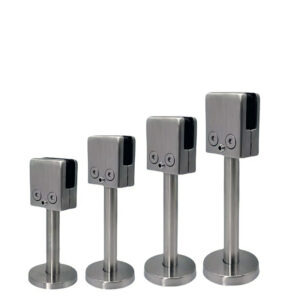
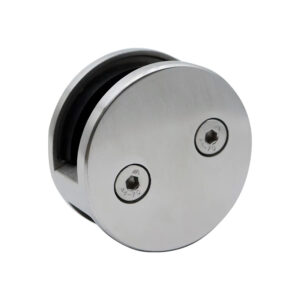
If you are comparing heavy duty glass spigots against base shoe options, the evaluation needs to account for both the hardware unit cost and the downstream labor implications of each system at your specific site geometry.
Site constraints that inflate installation spend
Hidden project conditions are the most reliable source of budget overruns on glass railing installations because they rarely appear in first-round quotes and are often unknown until site mobilization. Difficult access—rooftop installations, narrow stairwells, steep slopes requiring specialized lift equipment—adds cost through extra labor hours and equipment charges that a standard quote template does not account for. The 10–20% budget addition commonly associated with difficult access is a planning-criterion figure useful for contingency sizing, not a precise multiplier; the actual impact depends on the specific site and how far the access conditions deviate from a standard ground-level installation.
Custom glass shapes compound the problem. Curved panels and unusual angles require custom fabrication, longer lead times, and more complex installation, and the cost premium for non-rectangular panels can be substantial relative to standard flat panels. If the design specification calls for any curved sections, that line needs its own pricing treatment—folding it into a standard linear-foot rate will understate true cost.
| Site Variable | Typical Budget Impact | What to Confirm Before Final Quote |
|---|---|---|
| Difficult access (steep slopes, rooftops, narrow stairs) | Adds 10–20% to total | Quote includes access equipment and extra labor |
| Custom shapes (curved glass, unusual angles) | Up to 50% more than standard rectangular panels | Per-linear cost adjustment for non-standard shapes |
| Structural reinforcement (uneven slabs, weak decking) | Adds 10–20% to total | Site prep and reinforcement explicitly itemized |
Structural reinforcement of the mounting surface is the site constraint most likely to be omitted from a first-round quote because it depends on a site assessment that may not happen until late in preconstruction. An uneven slab edge, deteriorated decking, or a substrate that cannot accept the specified anchor pattern without reinforcement adds both material and labor cost that was not in the original scope. Confirming in writing that the quote either includes a site assessment or explicitly excludes reinforcement is the only way to establish which scenario applies before contract execution.
When evaluating whether a vendor has the supply chain and project support to manage these variables, a structured supplier review is worth the time—evaluating a stainless steel railing supplier before your first bulk order covers the criteria that separate capable partners from price-only competitors.
Design value needed to justify a premium package
A premium glass railing package—laminated 9/16″ panels, 2205 duplex stainless hardware, frameless mounting—carries a measurably higher upfront cost. That cost is only defensible if the project team can point to specific design or performance gains that the standard specification cannot deliver, and if those gains are traceable to the particular property, environment, or buyer expectation driving the decision.
The engineering case for premium specifications is concrete. Laminated 9/16″ glass provides improved durability and, critically, different post-breakage behavior compared to 3/8″ tempered—a structural safety distinction rather than an aesthetic one. Higher-grade stainless such as 2205 offers superior corrosion resistance in coastal or high-humidity environments where 304 would require more frequent maintenance or earlier replacement. These are measurable trade-offs that a project team can evaluate against site conditions and expected service life, and they provide a legitimate basis for justifying higher hardware spend when those conditions are present.
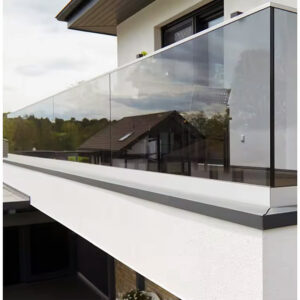
The design value case is more context-dependent. Frameless systems deliver unobstructed sightlines and a spatial openness that is genuinely meaningful on waterfront or scenic properties where the view is a primary asset. The commonly cited range of a 5–15% increase in property value for quality glass railing installations reflects market observation across varied conditions—it varies by property type, market, and installation quality, and should be treated as a planning criterion rather than an appraisal guarantee. For buyers who need to defend premium spend internally, the stronger argument is usually the lifecycle cost calculation: glass requires occasional cleaning; wood requires annual maintenance; coastal metal carries corrosion risk that compounds over time. Which comparison is most persuasive depends on what material the glass railing is replacing and what the site environment demands.
| Premium Feature | Performance/Design Gain | Value Justification |
|---|---|---|
| Thicker laminated glass (9/16″ vs 3/8″) | Improved durability and safety | Engineering trade-off supports higher upfront cost |
| Higher-grade stainless steel (2205 vs 304) | Superior corrosion resistance | Longer service life, especially in coastal or harsh environments |
| Frameless design | Unobstructed views, spatial expansion | 5–15% increase in home value; premium pricing on scenic properties |
| Low maintenance (glass vs wood or coastal metal) | Occasional cleaning, no annual staining or corrosion risk | Lifecycle cost savings offset higher initial investment |
The practical procurement implication is that a premium specification is hard to defend if the cost buckets have not already been separated clearly enough to show where the engineering gain is being purchased. If laminated glass and 2205 stainless appear as a blended line in a quote, there is no way to confirm whether the premium is going into the specification or into the margin. Detailed specifications for structural glass base rails are an example of where material grade and configuration need to be explicit in the quote rather than assumed.
Before any quote review becomes a valid budget input, two things need to be confirmed: the scope is consistent across competing quotes, and the site conditions that would trigger the most common cost additions—access difficulty, substrate reinforcement, custom shapes—have been assessed and either priced in or explicitly excluded. A lower unit rate built on a narrower scope and an unassessed site is not a better price; it is a deferred change order. The most productive use of pre-award time on a glass railing project is not negotiating unit rates—it is requiring enough line-item detail to confirm that the quotes being compared are actually measuring the same thing.
Frequently Asked Questions
Q: What happens if the site assessment reveals substrate problems after the contract is signed?
A: You will almost certainly face a change order rather than a negotiated line item, which removes your leverage entirely. The only reliable protection is requiring the vendor to either include a formal site assessment in the pre-award scope or explicitly exclude substrate reinforcement in writing — so you know before contract execution which scenario applies and can budget a contingency accordingly.
Q: Does the 10–20% site access premium apply even when the balcony is accessible but on a high floor requiring crane or hoist time?
A: Yes — the premium reflects any condition that requires equipment or labor beyond a standard ground-level installation, including rooftop or elevated work where hoist logistics add time and cost even if the slab itself is accessible. The 10–20% figure is a contingency-sizing reference, not a fixed multiplier; projects with restricted crane windows, noise curfews, or single-point hoist access can exceed that range depending on how many additional mobilization hours are required.
Q: Is a spigot system or a base shoe system the better choice for a coastal property where corrosion resistance is a priority?
A: Neither system eliminates the corrosion question on its own — the material grade of the hardware matters more than the fixing method type. A spigot system specified in 304 stainless will underperform a base shoe system built in 316 or 2205 duplex stainless in a salt-air environment. The fixing method decision should be resolved on structural and aesthetic grounds first; the corrosion resistance requirement should then be applied to the material grade selection within whichever system is chosen.
Q: At what project scale does investing in fully itemized quotes stop being worth the administrative effort?
A: It never stops being worth it when site conditions are unknown or when multiple vendors are being compared, regardless of project size. On very small single-vendor jobs where scope is tightly defined and the substrate has been physically inspected, a blended quote carries less risk. But the administrative cost of requesting line-item detail is low relative to the change order exposure it eliminates — on any project where glass type, post material, and installation scope are not already locked in writing, bundled quotes will consistently obscure where cost is actually sitting.
Q: If a project cannot demonstrate a clear view premium or coastal durability need, is there still a defensible reason to specify laminated 9/16″ glass over 3/8″ tempered?
A: Yes — the post-breakage behavior of laminated glass is a structural safety distinction that applies regardless of the view or environment. When 3/8″ tempered glass breaks, it shatters into small fragments; laminated glass holds together at the interlayer, which has direct implications for occupant safety in high-traffic or publicly accessible installations. If the project specification or local authority requires that post-breakage performance, that requirement alone justifies the glass upgrade independent of any design value argument.