Specifying handrail components for a European project without first establishing whether those components are structural or decorative is one of the more common ways a procurement decision creates downstream compliance exposure. The risk is not theoretical: structural handrail components have required CE marking under EN 1090-1 since July 2014, meaning any structural component delivered without it is already non-compliant at the point of supply, not at the point of inspection. Teams that discover this gap during Building Control submission face either replacement, delay, or a retroactive documentation chase that suppliers may not be equipped to resolve. Understanding where EN 1090 scope begins and ends — and how to use that distinction in specification language before ordering — is what separates a defensible procurement from one that accumulates risk quietly.
European component context before EN and CE discussions
The first question for any handrail component going into a European construction project is not whether CE marking is available, but whether the component type legally requires it. That determination depends on scope, and scope depends on function.
Under Regulation (EU) No 305/2011 — the Construction Products Regulation — and the harmonised standard EN 1090-1, CE marking became mandatory for structural steel and aluminium components in July 2014. EN 1090 covers fabrication, erection, installation, inspection, maintenance, and cleaning within the structural metalwork scope, including surface finish and joining. Components that fall within that scope cannot be legally supplied to an EU construction project without CE marking. Components that fall outside it — decorative fittings, non-structural trim, hardware that carries no load path obligation — are not subject to the same requirement and cannot legitimately carry it.
The practical consequence is that scope classification happens at specification, not at delivery. If a procurement team requests CE marking without first establishing whether the handrail in question is a load-bearing barrier component or a decorative element, the documentation either arrives incorrectly framed or does not arrive at all. Both outcomes create problems.
| Component Type | CE Marking Requirement | Compliance Significance |
|---|---|---|
| Structural handrail component (steel/aluminium, designed to Eurocode 3 or 9) | Mandatory since July 2014 under EN 1090-1 | Supply without CE marking after this date is non-compliant for EU construction projects |
| Decorative / non-structural handrail component | Not required; outside EN 1090 scope | Claiming CE marking where it does not apply leads to false compliance and documentation issues |
The distinction in that table is not a matter of interpretation. It is a regulatory boundary. Treating it as a grey area — or assuming that a supplier offering CE-marked components is automatically covering all parts of a supplied assembly — is where misclassification typically begins.
ISO and ASTM evidence that can support international sourcing
When sourcing stainless steel handrail components from outside the EU, ISO and ASTM references often appear in supplier documentation as evidence of material quality or manufacturing discipline. That evidence has value, but its relationship to CPR and EN 1090 compliance is indirect at best.
ISO material standards — such as those governing austenitic stainless steel grades — can establish that a component was produced from a defined alloy with traceable chemistry and mechanical properties. ASTM standards serve a comparable function in North American supply chains. For a contractor or distributor reviewing incoming material, an ISO or ASTM material test report provides a baseline for grade verification: the reported composition should correspond to the specified grade, and the document should be traceable to a heat or lot. That is a useful procurement check, and it is addressed in detail in the ISO vs ASTM Stainless Steel Hardware Standards guide.
What ISO or ASTM documentation cannot do is substitute for the structural execution framework that EN 1090 establishes. CE marking under EN 1090-1 requires a notified body, a factory production control assessment, and a Declaration of Performance against a harmonised standard. A material test report from an ISO or ASTM framework confirms what the steel is, not whether the fabrication and execution meet the requirements that trigger CPR obligations. For international sourcing, this means treating ISO and ASTM evidence as supporting material qualification rather than as a compliance route for EU structural components.
Fastener certification checks for stainless mounting hardware
Mounting hardware — base plates, anchor bolts, wall brackets, and fixing assemblies — sits at a junction between the handrail system and the building structure. The fasteners used at that junction are often specified loosely, and that creates a quiet audit risk.
For stainless fasteners going into structural or semi-structural connections on European projects, the relevant question is whether the fasteners carry traceable certification that confirms grade, mechanical properties, and batch origin. ASTM A193 and A194 are common reference points in international supply, and the MTR verification process for those grades is covered in the ASTM A193/A194 certification checklist. For EU projects specifically, EN ISO 3506 governs the mechanical properties of stainless steel fasteners; where structural connections are involved, the fastener certification should align with the execution class requirements of the main structure.
The practical check is straightforward: request the material test certificate before the fasteners are built into the assembly, not after. Certificates that arrive retrospectively are harder to trace to specific lots, and if the lot has already been installed, traceability becomes nominal rather than real. For surface mount base plates used in post installations, the anchor fasteners should carry documentation that matches the specified grade and is traceable to the same supply lot as the hardware.
The secondary check is grade confusion. In marine or coastal environments, the difference between 304 and 316 stainless at fastener interfaces matters more than it does at decorative surfaces, because crevice corrosion at concealed connections can progress undetected. If the handrail system is specified in 316, confirm that fasteners are specified to match — not assumed to match because they are described as stainless.
CE claim limits for project-specific handrail assemblies
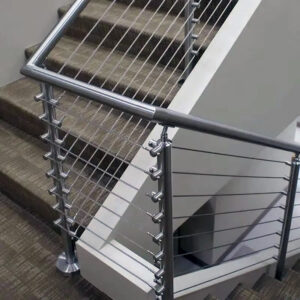
A complete handrail assembly typically includes components with different functions: structural posts, intermediate baluster sections, top rail, wall brackets, end caps, decorative sleeves, and fixings. Not all of these carry the same compliance obligation, and that difference creates a specific failure pattern when suppliers or buyers apply CE language to the assembly as a whole without distinguishing which parts are in scope.
Claiming CE marking for decorative or non-structural handrail components is not a conservative interpretation of the standard — it is a documented compliance error. The CE marking under EN 1090-1 applies only to structural components designed to Eurocode 3 (steel) or Eurocode 9 (aluminium). When a supplier marks a full assembly as CE compliant and the declaration bundles in non-structural parts, the documentation either overstates scope or leaves the structural components without a clear, defensible certificate trail. Either way, if a project undergoes a technical audit or a Building Control review, the bundled claim is difficult to defend.
| When Someone Claims… | The EN 1090 Reality Is… |
|---|---|
| The complete handrail assembly is CE marked under EN 1090 | CE marking applies only to the structural components; decorative or non-structural parts are outside scope |
| All handrail parts are treated as CE construction products | Only parts designed to Eurocode 3 or 9 and within the structural metalwork scope can carry CE marking |
The downstream consequence is project-level liability rather than a simple paperwork correction. If the structural components of a handrail assembly are not covered by a CE marking from a notified body, and the project proceeds on the assumption that they are, the responsible party — typically the specifier or the contractor who accepted the documentation — carries the exposure when that assumption is tested. The practical response is to require that suppliers identify, at the component level, which parts carry CE marking, under which notified body, and for which execution class. Broad claims about an assembly being CE compliant should be treated as a reason to ask more questions, not as confirmation.
EU project handoff after standard scope and documentation boundary are clear
Once the scope boundary is established — which components are structural, which are decorative, and which carry CE marking — the remaining risk is documentation timing. Compliance evidence for Building Control submission does not arrive automatically with a delivered product. It has to be requested, and the request has to happen before the order is placed.
This is a process detail that projects routinely get wrong. Teams that assume documentation will accompany the shipment often find, when handoff approaches, that the certificate scope is narrower than expected, that the Declaration of Performance references an execution class that does not match the project specification, or that the documentation does not exist in the form Building Control requires. Requesting compliance documentation explicitly — specifying the format, the execution class reference, and the notified body number — before committing to an order is the only reliable way to confirm that the documentation gap does not become a handoff delay.
| Checkpoint | Risk if Overlooked | What to Confirm |
|---|---|---|
| Compliance documentation requested before ordering | Handoff and Building Control submission may be delayed if documentation is not available | Request compliance documentation explicitly before placing the order |
| Third-party certification mark (e.g., Kitemark) | Without independent evidence, compliance documentation may be seen as insufficient | Verify the handrail system carries a recognised third-party certification mark |
The second checkpoint in that table — third-party certification marks — is relevant where the project or the building control authority is likely to treat independent evidence differently from manufacturer-issued documentation. Marks such as the BSI Kitemark represent an independently assessed compliance trail that sits outside the manufacturer’s own declaration. Not all handrail systems carry such marks, and their absence is not automatically disqualifying, but their presence reduces the credibility burden on the project team at handoff. If a system does not carry an independent mark, the quality of the manufacturer’s own documentation carries more weight, which increases the value of confirming certificate traceability before the order is finalised.
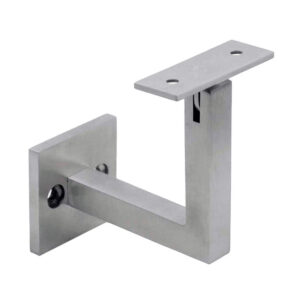
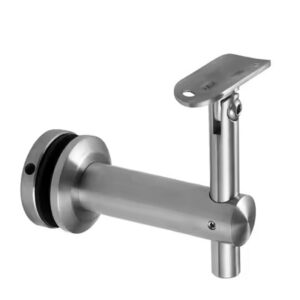
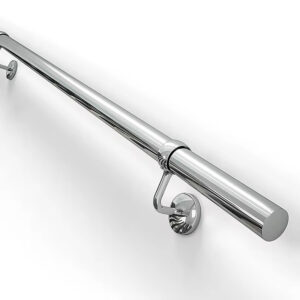
For stainless steel wall handrails specified into EU projects, this documentation check applies to both the rail profile and its wall mounting brackets, particularly where those brackets are load-bearing. The fixings and the fixed surface each represent a compliance interface, and both need documentation that can be presented independently if the project is reviewed at any stage after installation.
The central judgment this article is built around is a scope question, not a quality question. CE marking under EN 1090 is not a general quality signal that suppliers can attach to a handrail product to indicate it meets European standards broadly. It is a specific, scope-bounded claim tied to structural components designed to Eurocode 3 or 9, assessed by a notified body, and supported by a Declaration of Performance. Before requesting or accepting CE documentation for any handrail component, the responsible party needs to confirm whether that component type is in scope — and that confirmation needs to happen at specification, not at delivery.
For teams sourcing stainless handrail components for European projects, the pre-order documentation request is the most controllable point of risk reduction in the entire supply chain. Establish which components are structural, confirm which of those carry CE marking and under which notified body, specify the documentation format Building Control will require, and make those conditions explicit in the order. What arrives with the shipment will reflect what was asked for — and what was not asked for rarely arrives on its own.
Frequently Asked Questions
Q: What happens if a handrail component was supplied to an EU project after July 2014 without CE marking, and it has already been installed?
A: The component is non-compliant at the point of supply, not at the point of discovery, which means retroactive remediation is the only path forward. Options typically include replacement with a CE-marked component, a retroactive documentation chase with the original supplier if they hold a valid notified-body certificate that was simply not provided, or formal acceptance by the building control authority with engineering justification — none of which are straightforward once the component is built in. The least costly correction is always identifying the gap before installation, which is why scope classification at specification matters more than post-delivery documentation review.
Q: If a supplier provides ISO material test reports for stainless components, is that sufficient for a European project where CE marking is not strictly required for the component type?
A: For non-structural, decorative components that fall outside EN 1090 scope, ISO material test reports are a reasonable form of material qualification evidence but they do not confirm fabrication execution, dimensional tolerances, or joining quality. They establish what the steel is, not how it was processed. For those components, project teams should still define what documentation they need — grade confirmation, batch traceability, surface finish specification — and request it explicitly before ordering, since ISO MTRs alone may not satisfy a building control reviewer who expects more than chemistry data.
Q: At what point does a handrail component cross from decorative hardware into structural scope under EN 1090?
A: The boundary is functional, not visual. A component is within EN 1090 structural scope when it forms part of a load path — meaning it is designed to resist imposed loads such as crowd pressure, lateral force, or barrier loading in accordance with Eurocode 3 or Eurocode 9. Top rails and posts on barrier-rated balustrades typically cross that threshold; decorative end caps, sleeves, and non-load-bearing trim typically do not. The determination should be made by the structural engineer or specifier responsible for the project, not assumed from the supplier’s product description, because a supplier describing something as a handrail component does not itself resolve where it sits in the load path.
Q: Is a manufacturer’s own Declaration of Performance treated the same as a third-party certification mark like a BSI Kitemark during Building Control review?
A: Not always, and the difference matters in practice. A Declaration of Performance is a mandatory self-declaration under the CPR, and it is legally required for CE-marked construction products — but it is issued by the manufacturer. A third-party mark such as a Kitemark represents an independently assessed compliance trail, which reduces the credibility burden on the project team because it shifts evidentiary weight away from the manufacturer’s own assertion. Whether a building control authority treats them equivalently depends on the authority and the project type, but where independent evidence is available, it typically reduces the scrutiny applied to the manufacturer’s own documentation. If a system does not carry an independent mark, the traceability and specificity of the manufacturer’s Declaration of Performance become more important to verify before the order is placed.
Q: Does every contractor or distributor accepting handrail components for an EU project share the compliance exposure, or does liability sit only with the specifier?
A: Exposure is distributed across the chain in proportion to the role each party played in accepting or representing the documentation. The specifier carries exposure for the original classification and scope decision. The contractor carries exposure for accepting components and documentation at delivery without verifying that what arrived matches what was specified. The distributor may carry exposure if they represented compliance in a way that did not match the actual certificate scope. In practice, when a project is audited or a claim arises, the party who accepted bundled CE claims without asking which components were actually in scope — and under which notified body — is difficult to defend regardless of title. Explicit, component-level documentation requests, confirmed before the order, are the mechanism that limits that exposure.