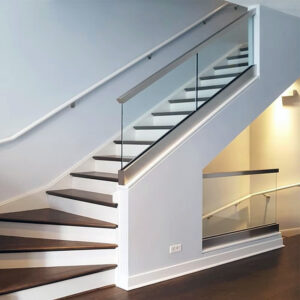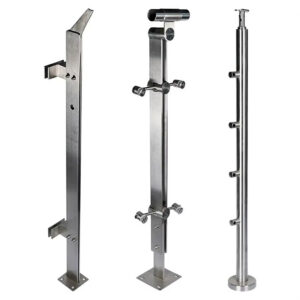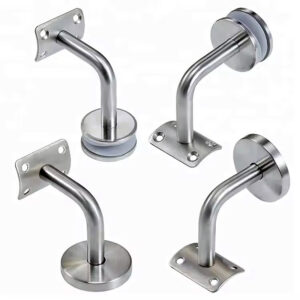
Specifying glass for stainless steel railing systems presents a critical challenge: meeting code minimums is not the same as ensuring life safety. The common misconception is that compliance with ANSI Z97.1 for safety glazing equates to a complete railing solution. In reality, this standard primarily addresses laceration risk, not the structural integrity required to prevent falls after glass breakage. This creates a specification gap where material selection, structural design, and certification must be integrated.
The importance of this topic is immediate. Building codes are explicit in classifying glass in guards as a hazardous location. With liability for system failure shifting upstream, architects and specifiers must navigate a complex landscape of impact standards, structural load requirements, and evolving interlayer technologies. A misstep can lead to failed inspections, project delays, and significant safety liabilities.
Understanding ANSI Z97.1 and Safety Glazing Requirements
The Core Mandate
ANSI Z97.1 establishes the baseline safety performance criteria for glazing materials. It defines safety glazing as material that reduces the likelihood of cutting or piercing injuries when broken by human contact. This standard provides the minimum benchmarks adopted by model building codes like the IBC. For railing applications, the Class A impact classification is the essential starting point.
A Critical Distinction
Professionals must recognize a fundamental limitation. ANSI Z97.1 focuses on mitigating injuries from broken glass shards. It does not address the railing’s ability to remain as a reliable fall-protection barrier post-breakage. This is a crucial specification gap. Relying solely on an ANSI Z97.1 certification for a glass railing is insufficient; the assembly must also comply with the International Building Code’s structural and fall-protection requirements.
The Specification Imperative
This distinction dictates a two-part verification process. First, confirm the glazing material itself is certified to ANSI Z97.1 Class A. Second, and more critically, verify that the complete glazed assembly—the specific glass, its thickness, the interlayer, and the stainless steel framing system—has been tested together and listed as a compliant guard system. Industry experts recommend always requesting the manufacturer’s official certification report that documents this full-assembly testing.
The Critical Role of Laminated Glass in Railing Safety
Code-Driven Material Selection
Building codes mandate safety glazing in hazardous locations. The IBC, Section 2407, is explicit: glass in handrails and guards must be laminated glass constructed of fully tempered or heat-strengthened glass, complying with ANSI Z97.1 Class A, when installed where there is a walking surface below. This condition applies to the vast majority of projects, making laminated glass the de facto and often legally required standard.
Why Laminated Glass is Non-Negotiable
The mandate exists due to post-breakage performance. Monolithic tempered glass, while strong, shatters completely upon catastrophic failure. It can dislodge from the frame, creating an immediate fall hazard. Laminated glass, with its polymer interlayer bonding multiple glass plies, retains glass fragments upon impact. This maintains the barrier’s integrity, preventing a total opening. This characteristic is essential for life safety in a fall-protection context.
Streamlining Project Approvals
Defaulting to code-compliant laminated glass streamlines the approval process. It avoids the niche and often complex analysis required to justify alternative materials like monolithic tempered glass, which may be permitted only under specific, limited conditions. From my experience reviewing submittals, projects specifying pre-certified laminated glass systems move through plan review and inspection phases with fewer objections, as they directly satisfy the inspector’s checklist for hazardous locations.
ANSI Z97.1 Class A Impact Test and Certification Explained
The Standardized Test Protocol
The Class A designation is earned through a rigorous, standardized impact test simulating a human collision. A 100-pound impactor bag is dropped from a specified height onto the glass specimen. To pass, the laminated glass must withstand the impact without creating dangerous openings or allowing large, sharp fragments to detach from the interlayer.
Layers of Assurance
Compliance is not a single test event but a system of quality assurance. It involves initial certification testing, ongoing manufacturer quality control (such as weekly ball-drop tests on production samples), and regular third-party audits. This chain of custody is critical for maintaining certification integrity over time and across production batches.
Verification and Marking
Products that pass are permanently marked with the ANSI Z97.1 designation, the manufacturer’s identity, and the glass type. However, the visible label is only part of the story. Inspectors and specifiers must verify the official documentation—the test report listing the exact assembly—to ensure true code compliance and warranty validity. The table below details the key components of this certification process.
The Testing and Certification Framework
The following table outlines the critical components of the ANSI Z97.1 Class A impact test and the ongoing verification required for certified products.
| Test Component | Specification / Requirement | Outcome / Marking |
|---|---|---|
| Impactor Weight | 100 pounds | Simulates human collision |
| Drop Height | Specified height | Determines impact energy |
| Pass Criteria | No dangerous openings | Retains glass fragments |
| Quality Control | Weekly ball-drop tests | Ongoing manufacturer verification |
| Third-Party Audit | Biannual frequency | Ensures compliance integrity |
| Permanent Marking | ANSI Z97.1, manufacturer ID | Required on certified product |
Source: CPSC 16 CFR 1201 Safety Standard for Architectural Glazing Materials. This mandatory federal standard classifies glazing materials by hazard level and prescribes the impact test methods and performance criteria that form the basis for ANSI Z97.1 certification for safety glazing in hazardous locations like railings.
Key Specifications for Laminated Glass in Stainless Steel Systems
Defining the Base Material
Specifying ANSI Z97.1 Class A laminated glass requires precise technical parameters. The laminate must use fully tempered or heat-strengthened glass plies, with fully tempered being the most common selection for its higher strength. The IBC mandates a minimum nominal thickness of 1/4 inch (6.4 mm) for glass used in handrails and guards. This is a non-negotiable starting point for the material specification.
The Heart of Performance: The Interlayer
The type and thickness of the polymer interlayer dictate performance far beyond basic safety. Specifications like “.090 PVB” refer to the interlayer thickness, which directly correlates with the assembly’s impact rating. This parameter also influences secondary characteristics like acoustic dampening, UV resistance to prevent interlayer discoloration, and enhanced structural integrity for applications in security or hurricane zones.
Specifying for Value
Therefore, the specification must consider the full spectrum of project needs. Selecting an interlayer based solely on the code minimum can overlook opportunities for added value, occupant comfort, and long-term durability. The table below summarizes the key specification parameters that form the decision matrix for project-specific glass selection.
Core Specification Parameters
When defining the laminated glass for a railing system, these parameters form the technical foundation that ensures both compliance and performance.
| Parameter | Minimum / Typical Specification | Key Driver / Consideration |
|---|---|---|
| Glass Type (Ply) | Fully tempered | Most common for strength |
| Minimum Nominal Thickness | 1/4 inch (6.4 mm) | IBC mandate for guards |
| Interlayer Type | PVB or Ionoplast | Dictates advanced performance |
| Interlayer Thickness (e.g., PVB) | .090 inch | Correlates with impact rating |
| Performance Spectrum | UV resistance, acoustic dampening | Beyond basic code compliance |
Source: ASTM C1172 Standard Specification for Laminated Architectural Flat Glass. This standard establishes the foundational material quality, physical properties, and durability requirements for the laminated architectural glass used as the base material in railing applications, informing specifications for glass type, construction, and interlayer.
Structural Design and Load Considerations for Glass Railings
The Glass and Frame as a System
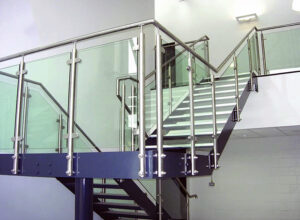
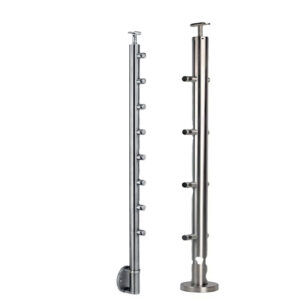
The glass panel and its stainless steel framing constitute a single structural assembly. This assembly must withstand code-prescribed loads, typically a uniform load and a concentrated load applied to the top rail. The framing system—posts, top rail, base channel—must be engineered to support the glass without inducing undue stress concentrations, with strict deflection limits to prevent glass-to-glass or glass-to-hardware contact.
Attachment and Compatibility
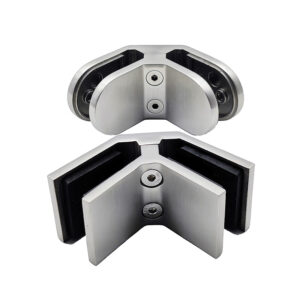
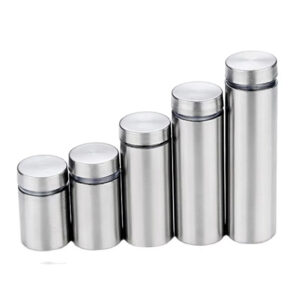
Attachment methods—whether clamps, U-channels, or bolted standoffs—must secure the glass firmly while allowing for thermal expansion and movement. Glass balusters require positive support from a structurally adequate top rail unless the laminated glass panels are of a specific, tested multi-ply construction proven to remain in place as a barrier after breakage per standards like ASTM E2353.
Engineering Liability
This holistic engineering approach is vital. The liability for system failure does not rest solely with the installer. It shifts upstream to the manufacturers and specifiers, who must meticulously document design justifications and component compatibility. Easily overlooked details include the compatibility of cleaning agents with the interlayer and the long-term durability of edge seals in the framing system, which can be critical for exterior applications.
Code Compliance: IBC, Local Amendments, and Project Execution
Aligning with the Code Hierarchy
Successful execution requires aligning the glass specification with the model IBC code and all local amendments. The specific application—interior versus exterior, residential versus commercial—may invoke additional requirements. For example, exterior railings in hurricane-prone regions often require laminated glass that meets both ANSI Z97.1 and large/small missile impact tests (e.g., ASTM E1996).
The Trend Toward Higher Performance
The rigorous testing developed for coastal zones sets a performance precedent that is expanding inland. This is driven by increasing extreme weather events and a growing focus on overall building resilience. Proactively adopting these higher standards for critical facilities, such as hospitals or emergency centers, can be justified by insurance incentives and safety marketing.
The Specifier’s Responsibility
Ultimately, the architect and specifier bear the responsibility for verification. This means confirming the selected product carries the proper ANSI Z97.1 Class A certification and, more importantly, that the complete, tested assembly meets all governing codes for the project’s jurisdiction. This verification is the final, essential step in mitigating liability.
Comparing Laminated Glass Types: PVB vs. Ionoplast Interlayers
Defining the Interlayer’s Role
The polymer interlayer is the heart of laminated glass performance. It is the component that bonds the glass plies together and dictates post-breakage behavior. The choice between standard Polyvinyl Butyral (PVB) and high-performance ionoplast (e.g., SentryGlas®) interlayers is a central decision that moves the specification from basic compliance to optimized performance.
Performance and Application Differences
Standard PVB interlayers provide essential glass retention and are cost-effective for many standard applications. Ionoplast interlayers offer significantly higher stiffness, strength, and post-breakage integrity. This makes them ideal for applications requiring enhanced structural performance, such as railings with minimal framing, hurricane zones, or areas where security is a concern.
The Value Proposition
The choice directly impacts the railing’s ability to resist deflection under load and maintain its form after impact. As performance-based design expectations grow, specifying advanced interlayers can future-proof projects against evolving standards. The table below provides a direct comparison to inform this critical selection.
Interlayer Performance Comparison
Selecting the right interlayer material is a key value-engineering decision. This comparison highlights the functional differences between standard and advanced options.
| Performance Attribute | Standard PVB Interlayer | Ionoplast Interlayer (e.g., SentryGlas®) |
|---|---|---|
| Primary Function | Essential glass retention | High post-breakage integrity |
| Stiffness & Strength | Standard performance | Significantly higher |
| Cost Profile | Cost-effective | Higher initial investment |
| Ideal Application | Many standard railings | Minimal framing, hurricane zones |
| Value Proposition | Basic code compliance | Future-proofing, resilience |
Source: Technical documentation and industry specifications.
Selecting the Right System: A Specifier’s Decision Framework
A Structured Five-Step Process
Navigating the specification requires a structured decision framework to manage complexity and risk. This process moves from code analysis to final verification, ensuring no critical requirement is overlooked.
Step 1: Confirm the Mandate
First, confirm the “walking surface below” condition. This is the primary driver, dictating the use of laminated glass per IBC 2407. This step establishes the non-negotiable material category.
Step 2: Select the Interlayer
Second, select the interlayer type and thickness based on a triad of needs: structural (loads, deflection), environmental (UV, temperature, hurricane risk), and security. This is where performance is optimized beyond the code minimum.
Step 3: Verify Assembly Compatibility
Third, and most critical, verify that the chosen laminated glass and the specific stainless steel framing system are tested and certified as a compatible assembly. The complexity of this compatibility favors integrated glass railing system providers who control both manufacturing and certification, which reduces liability and simplifies procurement.
Step 4: Leverage Digital Tools
Finally, leverage available digital tools for specification and verification. Emerging platforms that cross-reference codes, product approvals, and component compatibility will become essential. They reduce errors in creating compliant specs and enable field verification via databases linked to permanent glass etchings. The framework below summarizes this systematic approach.
The Specification Decision Framework
Following a disciplined process mitigates risk and ensures a compliant, high-performance outcome.
| Decision Step | Key Action / Condition | Outcome / Consideration |
|---|---|---|
| Step 1: Mandate Check | “Walking surface below” | Dictates laminated glass use |
| Step 2: Interlayer Selection | Structural, environmental needs | PVB vs. Ionoplast choice |
| Step 3: Compatibility Verification | Tested, certified assembly | Reduces liability risk |
| Step 4: Sourcing Strategy | Integrated system provider | Simplifies procurement |
| Step 5: Verification Tools | Digital platforms, databases | Reduces compliance errors |
Source: Technical documentation and industry specifications.
Specifying ANSI Z97.1 Class A laminated glass for stainless steel railings hinges on three priorities: verifying full-assembly certification, selecting the interlayer based on total project performance needs, and rigorously aligning with all applicable codes and amendments. This moves the project from mere compliance to assured safety and durability.
Need professional guidance on specifying certified laminated glass systems for your next project? The technical experts at Esang can provide detailed test reports and specification support to ensure your railing designs meet all safety and structural requirements.
Frequently Asked Questions
Q: Does specifying ANSI Z97.1 Class A laminated glass automatically make my stainless steel railing system code-compliant?
A: No, ANSI Z97.1 Class A certification alone is insufficient for full code compliance. This standard addresses laceration risk from broken glass but does not ensure the assembly functions as a fall-protection barrier. The International Building Code (IBC) mandates that the entire glazed assembly—glass, framing, and attachments—must be tested and certified together to meet structural load requirements. This means you must verify the manufacturer’s official documentation lists the complete, specific system you are installing, not just the glass component.
Q: What are the key differences between PVB and ionoplast interlayers for structural glass railings?
A: The primary difference lies in post-breakage stiffness and strength. Standard Polyvinyl Butyral (PVB) interlayers provide essential glass retention and are cost-effective. Ionoplast interlayers, like SentryGlas®, offer significantly higher rigidity and structural integrity, maintaining the panel’s shape better after impact and under load. This makes ionoplast ideal for railings with minimal framing, hurricane zones, or security applications. For projects in regions with extreme weather or where long-term resilience is a priority, specifying an advanced interlayer can provide substantial performance benefits beyond basic code minimums.
Q: How do you validate that laminated glass in the field truly meets ANSI Z97.1 Class A requirements?
A: Valid certification requires a chain of custody from testing to installation. You must verify the glass carries the permanent etched mark with the ANSI Z97.1 designation and manufacturer identity. Crucially, inspectors need the manufacturer’s official documentation proving the specific glazed assembly—the exact glass type, thickness, interlayer, and framing system—has passed the required impact tests and is listed together. Relying solely on visible labels is inadequate for ensuring code compliance and warranty validity, shifting liability to the specifier if documentation is missing.
Q: When is laminated glass absolutely required for stainless steel railings versus when can monolithic tempered glass be used?
A: Laminated glass constructed with fully tempered or heat-strengthened glass is mandated by the IBC for virtually all applications where a walking surface exists below the railing. This condition applies to over 90% of projects. The only potential exception is for niche applications with no walking surface below, which would require a detailed, code-approved analysis to justify monolithic tempered glass. For practical project execution and streamlined approvals, defaulting to code-compliant laminated glass is the standard, low-risk path for specifiers and architects.
Q: What minimum glass thickness and type does the IBC require for glass handrails and guards?
A: The International Building Code mandates a minimum nominal thickness of 1/4 inch (6.4 mm) for glass used in handrails and guards. Furthermore, the code requires this glass to be laminated, using plies of either fully tempered or heat-strengthened glass. The ASTM C1172 Standard Specification for Laminated Architectural Flat Glass defines the material quality for these laminates. This means your specification must explicitly call for laminated glass meeting these minimums, with the interlayer type selected based on additional performance needs like structural stiffness or impact resistance.
Q: What additional performance standards should we consider for exterior glass railings in severe weather regions?
A: For exterior railings in hurricane-prone or severe weather regions, you must look beyond ANSI Z97.1. Codes often require the laminated glass to also pass large and small missile impact tests, which simulate windborne debris. The rigorous testing protocols developed for these coastal zones are becoming a precedent for building resilience inland. For critical facilities or projects where insurance incentives and future-proofing are priorities, proactively specifying glass that meets these enhanced impact standards can offer significant long-term value and safety marketing advantages.
Q: Who bears the liability if a certified glass railing system fails after installation?
A: Liability for a system failure shifts upstream to the manufacturers and specifiers involved. The architect and specifier are responsible for verifying the selected product carries proper ANSI Z97.1 Class A certification and that the complete, tested assembly meets all governing codes, including structural load requirements. Manufacturers must provide documentation proving component compatibility and performance. This holistic engineering approach is vital, as failure to meticulously document design justifications and assembly compatibility can expose all parties to significant legal and financial risk.