Selecting the right hardware for indoor applications is a critical engineering decision disguised as a simple procurement task. The wrong material choice leads to premature failure, safety risks, and hidden lifecycle costs that erode project value. Professionals must navigate a market saturated with options, where technical specifications are often obscured by marketing claims and the lowest bidder rarely offers the best long-term solution.
The dominance of 304 stainless steel as the default standard is not accidental. Its performance in controlled indoor environments provides an optimal balance of corrosion resistance, mechanical strength, and cost. This guide provides a decision framework for procurement managers, facility engineers, and project leads to specify, source, and install 304 hardware with confidence, ensuring safety, compliance, and total cost of ownership.
Why 304 Stainless Steel is the Standard for Indoor Hardware
The Material Composition Advantage
304 stainless steel’s austenitic structure, with 18-20% chromium and 8-10.5% nickel, delivers excellent resistance to oxidation and corrosion from typical indoor atmospheres. This chemistry effectively counters tarnishing and rust from ambient humidity and incidental moisture spills. It performs this role without the premium cost of highly alloyed grades like 316, which are engineered for harsh chloride environments. The material’s inherent durability provides a clean, professional appearance that lasts.
Market Perception and Commoditization
The specification has become a baseline for perceived quality. As industry research notes, this has educated consumers to demand 304 as a minimum benchmark, effectively commoditizing lower-grade materials like coated carbon steel or 430 stainless. This market force pushes 304 into its standard position for any application where durability and aesthetics are valued. Its widespread adoption across residential and light commercial projects further cements its status as the reliable, default choice. In my experience, specifying anything less than 304 for permanent indoor fixtures invites unnecessary risk and future client questions about material quality.
The Performance-Cost Equilibrium
For indoor environments, 304 represents the rational engineering sweet spot. Its capability profile—excellent formability, good weldability, and sufficient corrosion resistance—perfectly matches the environmental demand of controlled interiors. Investing in a more resistant alloy like 316 offers diminishing returns where chloride exposure is minimal, while opting for a cheaper alternative introduces maintenance liabilities. This equilibrium makes 304 the undisputed technical and economic standard.
Cost Analysis: 304 vs. Other Materials for Indoor Use
Understanding Total Lifecycle Cost
Evaluating cost requires a lifecycle perspective, not just initial purchase price. While 304 stainless carries a higher upfront cost than plated or painted carbon steel, this premium is offset by eliminating maintenance, replacement, and potential damage costs. A failed bracket can damage inventory, interrupt operations, or cause injury. The true cost of a material includes these operational risks.
Comparative Material Economics
A tiered analysis clarifies the value proposition. Successful suppliers use a multi-material strategy, positioning 304 as the premium, all-environment option within a broader catalog. This allows it to compete on total lifecycle value, not just corrosion resistance.
The table below summarizes the key economic and performance trade-offs:
| Material | Typical Cost Premium | Key Indoor Limitation |
|---|---|---|
| 304 Stainless | Baseline (0%) | Minimal; ideal match |
| 316 Stainless | Higher premium | Diminishing returns |
| Coated Carbon Steel | Lower initial cost | Maintenance, replacement |
| 430 Stainless | Lower initial cost | Lower corrosion resistance |
Source: Technical documentation and industry specifications.
The Rational Economic Choice
For the vast majority of indoor projects, 304 is the rational economic choice. The initial investment is justified by its longevity and zero-maintenance profile. Industry experts recommend viewing the premium as insurance against failure. When specifying for a project with a multi-year horizon, the marginally higher material cost becomes negligible when amortized over the hardware’s service life, which often outlasts the structure it supports.
Key Specifications for Selecting Indoor 304 Hardware
Non-Negotiable Technical Criteria
Selection begins with verifying non-negotiable specifications. First, demand material certification to A2/304 grade. Second, confirm the Safe Working Load (SWL) significantly exceeds the intended static load with a generous safety margin; dynamic loads require a 4:1 or greater factor. Third, ensure standardized metric thread sizes (e.g., M6, M8) for compatibility with other components.
The Rise of Standardized Kits
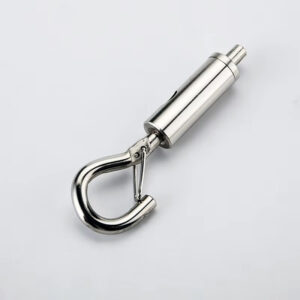
E-commerce has driven specification standardization. Clear metrics like “M8” and “400 lb SWL” are now mandatory for consumer trust and comparison. Furthermore, the market has shifted toward complete kits—bundling pad eyes, snap hooks, screws, and anchors. This simplifies procurement but limits customization. Buyers must evaluate kits as integrated systems, ensuring every component meets the project’s specific load and size requirements. A chain is only as strong as its weakest link, and a hardware kit is only as reliable as its lowest-rated component.
Specification Verification Framework
Use the following framework to audit product specifications. This table outlines the critical metrics and the considerations behind them:
| Specification | Key Metric/Value | Critical Consideration |
|---|---|---|
| Material Certification | A2/304 Grade | Supplier verification required |
| Safe Working Load (SWL) | Exceeds intended load | 4:1+ margin for dynamic loads |
| Thread Size | Standardized (e.g., M8) | Ensures compatibility |
| Kit Components | Complete system | Limits customization |
Source: ASTM F593 Standard Specification for Stainless Steel Bolts, Hex Cap Screws, and Studs. This standard governs the chemical and mechanical properties of 304 stainless steel fasteners, directly informing the material certification and load capacity specifications critical for hardware selection.
How to Ensure Proper Installation and Load Safety
The Primacy of Substrate Evaluation
The advertised load capacity is meaningless without correct installation. System failure is more likely from improper installation than from material failure. The process starts with substrate evaluation. Hardware must be mounted to a structurally sound member—a solid wood joist, steel beam, or concrete ceiling—using anchors rated for both the substrate and the load. The building structure itself must be capable of bearing the load.
Step-by-Step Installation Protocol
A meticulous installation protocol is non-negotiable. First, use the correct drill bit to create a pilot hole; using a hammer alone can damage threads and compromise tensile strength. Second, fasten the hardware until it is flush with the surface, avoiding over-torquing which can strip threads or under-torquing which creates play. For masonry, use the included expansion anchors or chemical anchors as specified.
The table below details the critical steps:
| Installation Step | Key Action | Critical Tool/Check |
|---|---|---|
| Substrate Evaluation | Mount to sound structure | Solid wood joist, concrete |
| Pilot Hole Creation | Use correct drill bit | Never use hammer alone |
| Hardware Fastening | Fasten until flush | Avoid damaged threads |
| Load Verification | Consult professional | For human weight/heavy objects |
Source: Technical documentation and industry specifications.
When to Involve a Professional
For any permanent installation supporting human weight (swings, hammock chairs, fitness equipment) or very heavy objects, consulting a structural engineer is mandatory. They will verify the load path and ensure the building’s design can accommodate the point loads. This step is your final safeguard, transforming a DIY project into a professionally engineered installation.
Which Indoor Applications Are Best Suited for 304?
Overhead and Suspension Systems
304 hardware excels in overhead applications where failure carries high consequences. This includes mounting points for hammock chairs, swing seats, aerial yoga rigs, and heavy pendant lighting. The material’s strength and corrosion resistance ensure long-term reliability in these dynamic or static load scenarios. The convergence of DIY and light commercial use means professional-grade materials are now accessible for these projects, raising the safety standard across the board.
Utility and Storage Solutions
In utility spaces like garages, basements, and warehouses, 304 is ideal for organizing heavy items. It is used for bike hoists, ladder racks, shelving brackets, and pulley systems. These environments may have higher humidity or temperature fluctuations, making 304’s corrosion resistance more valuable than in living spaces. I’ve seen poorly specified hardware in garages fail within a year, while 304 components last indefinitely.
Decorative and Functional Mounting
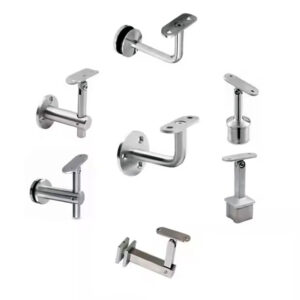
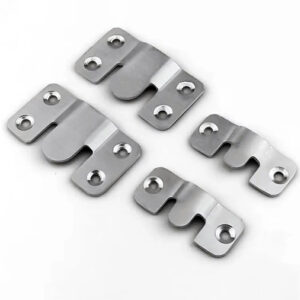
The aesthetic quality of 304 makes it suitable for visible applications. It is used for mounting heavy mirrors, artwork, floating shelves, and architectural fixtures. Its brushed or polished finishes maintain appearance without staining adjacent surfaces. For comprehensive mounting solutions, including a full range of brackets and fasteners designed for these varied tasks, review the dedicated hardware and bracket product line. This versatility across functional and decorative roles underscores its status as a universal indoor solution.
Long-Term Value and Maintenance Considerations
The Minimal Maintenance Proposition
The long-term value of 304 stainless is its near-zero maintenance requirement. It maintains a clean, non-staining appearance with occasional cleaning using mild soap and water. This avoids the rust, flaking, or discoloration that plagues inferior materials, eliminating ongoing upkeep costs and the operational disruption of replacements.
Sustainability and Lifecycle Analysis
This durability provides a foundational narrative for sustainability. The material’s long service life reduces waste from frequent replacements. Furthermore, 304 stainless steel is fully recyclable at end-of-life, supporting circular economy principles. Choosing 304 moves beyond durability claims to explicit environmental value, positioning it for future “buy-it-for-life” standards. Its lifecycle analysis often shows a lower environmental impact than materials requiring periodic recoating or early replacement.
Calculating Total Cost of Ownership
The total cost of ownership (TCO) calculation for 304 is compelling. Factor in the initial cost, projected maintenance costs (zero), replacement probability (near zero), and risk cost of failure. Over a 10-year horizon, 304 consistently outperforms cheaper alternatives. This makes it not just a technical specification but a sound financial decision for asset management.
Evaluating Supplier Quality and Material Certifications
Transparency as a Quality Proxy
Supplier evaluation hinges on technical transparency. Reputable suppliers provide material certifications confirming the alloy meets ASTM A276/A276M Standard Specification for Stainless Steel Bars and Shapes for 304 grade. This documentation is your first defense against substandard or mislabeled materials. In a market driven by e-commerce volume and platform algorithms like “Amazon’s Choice,” documented quality assurances differentiate serious engineering suppliers from retailers.
Auditing Product Listings and Documentation
Scrutinize product listings for detailed specification sheets, independent load-test data, and clear imagery of product markings. A supplier’s willingness to provide this technical documentation is a key indicator of robust quality control. Easily overlooked details include the origin of the raw material and the manufacturing standard used for the fastener components, which should align with recognized standards like ASTM F593.
The Certification Imperative
Never accept a verbal assurance of quality. Require certified mill test reports or material certificates that trace the alloy composition. This is non-negotiable for commercial or liability-sensitive applications. A supplier that cannot or will not provide this is a significant risk. Your procurement process must mandate this documentation for purchase approval.
Final Selection Checklist for Your Indoor Project
Consolidated Decision Framework
Use this consolidated checklist to ensure a successful, safe selection. It synthesizes the critical verification points from material through to installation.
| Checkpoint | Requirement | Verification Method |
|---|---|---|
| Material | 304/A2 certification | Supplier documentation |
| Load Rating | SWL > max load | 4:1 safety factor |
| Specifications | Correct thread size | Match to application (M8) |
| Kit Completeness | All mounting hardware | Included/specified anchors |
| Professional Consultation | For critical loads | Structural engineer review |
Source: ASTM A276/A276M Standard Specification for Stainless Steel Bars and Shapes. This standard defines the chemical composition and quality criteria for Type 304 stainless steel, forming the basis for verifying material certification, the first and most critical checkpoint in the selection process.
Pre-Installation Verification
Before installation, confirm your mounting surface is structurally sound for the intended load. Gather the correct tools—a quality drill, the correct drill bit, a level, and the specified torque wrench if needed. Follow the manufacturer’s instructions precisely; deviations void warranties and compromise safety.
Implementing the Checklist
Treat this checklist as a live project document. Assign each checkpoint to a team member for verification and sign-off. For human-rated or high-value load applications, the final step—professional engineering consultation—is not optional. This disciplined approach transforms selection from a guessing game into a managed, low-risk process.
Specifying 304 stainless steel hardware requires a disciplined focus on three priorities: verified material certification, a load rating with appropriate safety margins, and a certified installation plan. This framework mitigates risk and ensures long-term performance. The initial specification effort prevents costly failures and protects project integrity.
Need professional-grade 304 stainless hardware solutions backed by technical documentation and engineering support? Explore the engineered product catalog and specification resources at Esang. Our team provides the material certifications and application guidance required for commercial and demanding DIY projects.
For direct technical inquiries or to discuss specific project requirements, you can also Contact Us.
Frequently Asked Questions
Q: How do you verify that a 304 stainless steel bolt meets the required material and performance standards?
A: You must confirm the supplier provides a material certification specifying ASTM A2/304 grade, which defines the required chromium and nickel content. For the bolts themselves, compliance with ASTM F593 is critical, as it governs the chemical, mechanical, and dimensional properties of stainless steel fasteners. This means procurement teams should reject any supplier that cannot furnish these specific certifications for hardware used in load-bearing applications.
Q: What is the key difference between static and dynamic load ratings when selecting indoor hardware?
A: The Safe Working Load (SWL) for static weight must significantly exceed your maximum intended load, but dynamic loads—from movement or impact—demand an even greater safety factor, typically 4:1 or higher. This distinction is vital because hardware rated for a static 400 lbs may fail under a much lower dynamic force. For projects involving swings, exercise equipment, or any moving load, you must select components specifically validated for dynamic use and consult a structural engineer.
Q: Why is 304 stainless steel considered the cost-effective standard for indoor projects instead of grade 316?
A: 304 provides excellent corrosion resistance against indoor humidity and incidental moisture at a lower cost than marine-grade 316. For environments without chlorides or salt spray, the premium for 316 offers minimal functional return, making 304 the rational economic choice where material capability matches the environmental demand. This means specifiers should allocate budget to 316 only for coastal or high-chemical exposure areas, using 304 as the default for standard indoor applications.
Q: How can we ensure the structural integrity of a mounting point beyond just the hardware’s load rating?
A: System failure most often stems from improper installation, not material failure. You must evaluate the substrate—mounting to a sound structural member like a concrete ceiling or solid wood joist—using anchors matched to that material. The raw material standard, such as ASTM A276/A276M, ensures component quality, but correct fastening into a capable structure is what delivers safety. This implies your installation plan is incomplete without verifying the building itself can support the load, especially for permanent installations.
Q: What should we look for in a supplier’s product listing to avoid substandard 304 hardware?
A: Prioritize listings with explicit technical documentation: material certifications (A2/304), detailed load-test data, clear imagery of product markings, and complete specification sheets. In a market driven by volume and ratings, this transparency differentiates serious suppliers from those merely optimizing for platform algorithms. For professional procurement, you should establish a requirement for this documented proof before purchase to safeguard against mislabeled or inferior materials.
Q: When selecting a hardware kit, what system-level factors must be evaluated?
A: You must assess the kit as an integrated system, ensuring all bundled components—pad eyes, snap hooks, screws, and anchors—collectively meet your project’s specific load, size, and substrate requirements. Standardized metric threads (e.g., M8) ensure compatibility, but the included anchors must be suitable for your wall type. This means buyers should verify kit completeness and component specifications match their installation environment, as the convenience of a bundled solution can limit customization.